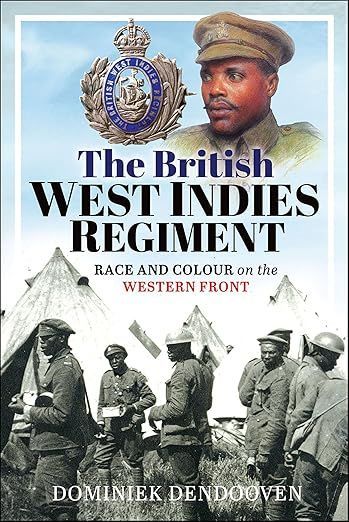
The British West Indies Regiment: Race and Colour on the Western Front by Dominiek Dendooven offers a comprehensive examination of the experiences of Caribbean soldiers during the First World War. This scholarly work delves into the formation, deployment, and post-war challenges faced by the British West Indies Regiment (BWIR), highlighting the complex interplay of race, colonialism, and military service.
About the Book
Published by Pen & Sword Military in 2023, this 144-page volume provides a military-political history that foregrounds the pervasive themes of race, colour, and prejudice within the British Army during the Great War. Dendooven meticulously details how, despite systemic discrimination, over 15,600 volunteers from across the Caribbean—including Jamaica, Trinidad and Tobago, Barbados, and British Guiana—served in various theatres of war, notably in Egypt, Palestine, and the Western Front.
The narrative explores the duality of the soldiers' experiences: their unwavering loyalty to the British Crown, often rooted in the legacy of emancipation, juxtaposed against the harsh realities of racial inequality and limited recognition. The book also sheds light on the post-war period, discussing the Taranto mutiny of 1918, where BWIR soldiers protested against discriminatory treatment, and the subsequent formation of the Caribbean League, which advocated for equal rights and self-determination.
Significance
Dendooven's work is pivotal in understanding the broader implications of the BWIR's service. It illustrates how military service became a catalyst for political consciousness among Caribbean soldiers, fostering a burgeoning sense of "West Indianess" and a desire for political advancement within the empire. The book underscores the paradox of colonial subjects fighting for freedoms abroad that they were denied at home, thus contributing to the early discourse on decolonization and civil rights.
Relevance to Brighton and the South Coast
Brighton and the surrounding areas hold a unique connection to the BWIR. In 1915, the 1st Battalion of the BWIR was formed in Seaford, East Sussex, just a short distance from Brighton. The region served as a training ground for these soldiers before their deployment to various fronts. This local link provides a tangible connection to the broader narratives explored in Dendooven's book, offering residents and historians in Brighton an opportunity to delve into a significant yet often overlooked chapter of their local history.