A Brighton medical student helped change how doctors understood the pulse, high blood pressure and kidney disease.
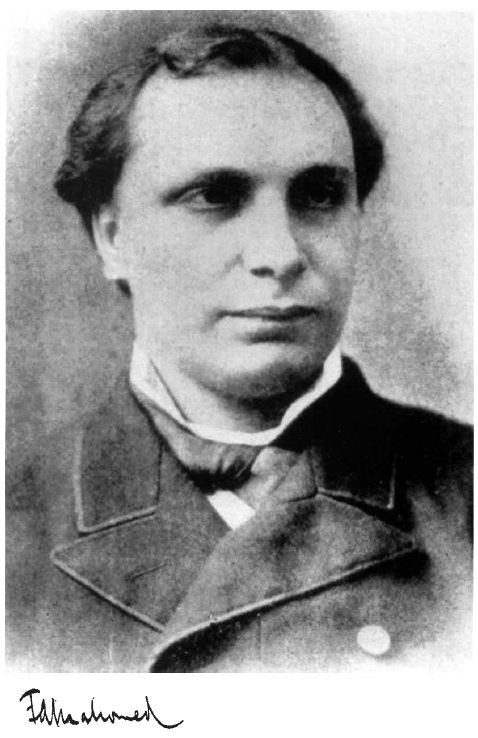
Frederick Akbar Mahomed, before 1884. Photographer and photographic provenance unknown. Via Wikimedia Commons, marked public domain. Source: https://commons.wikimedia.org/wiki/File:Frederick_Mahomed.jpg
Frederick Akbar Mahomed began his medical training in Brighton, in the town where his grandfather had made a name through steam baths and massage. Born in 1849, he went on to help doctors recognise that high blood pressure could be a disease in its own right, even before obvious kidney damage appeared.
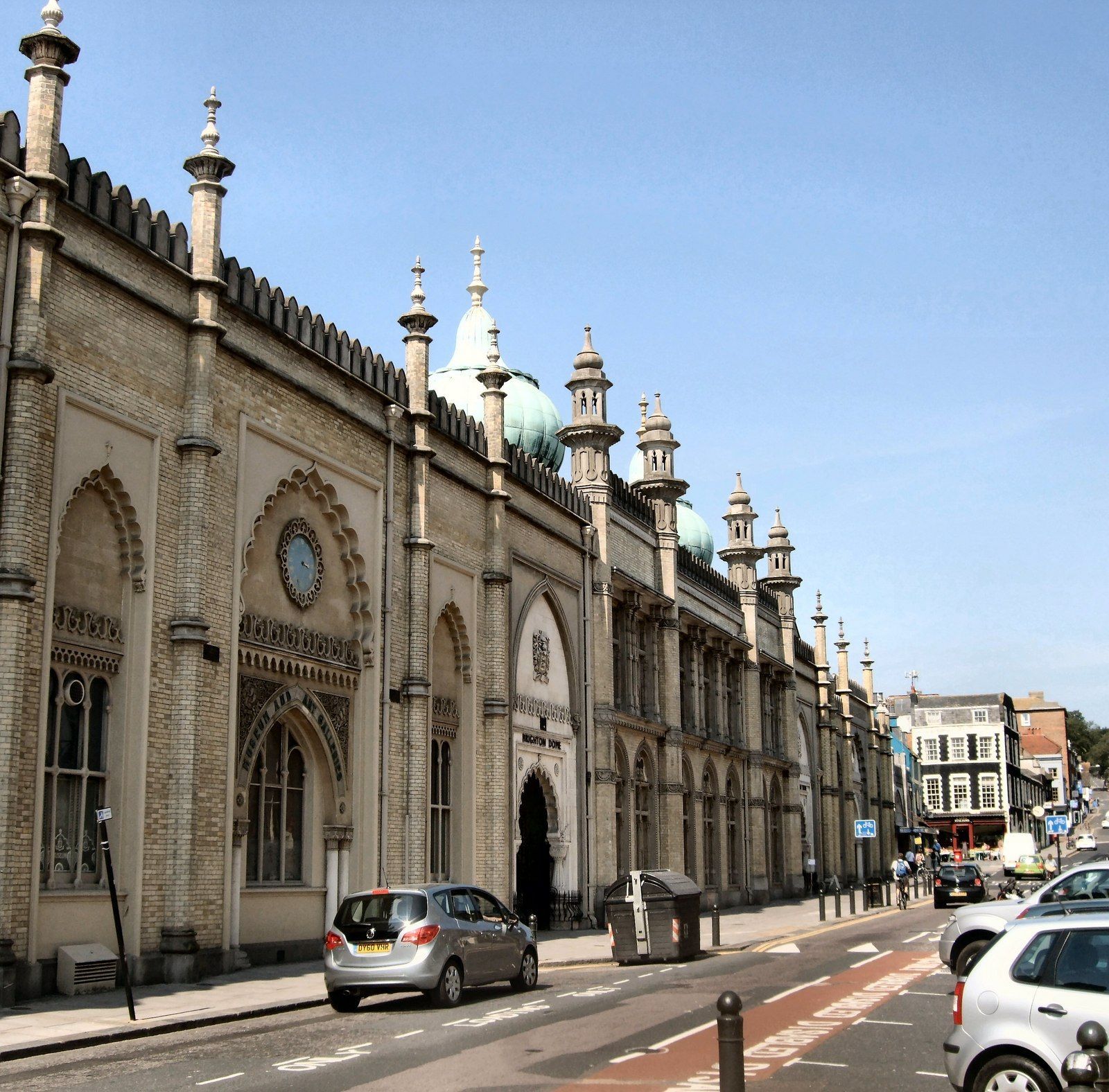
His work belongs to the history of medicine, but it also belongs to Brighton. The Royal Sussex County Hospital was an early training ground for a young man whose questions about the pulse would take him well beyond Sussex.
A Brighton family concerned with health
His grandfather, Sake Dean Mahomed, had brought Indian-style vapour treatments and shampooing massage to Brighton's seafront. Frederick Akbar's father, also called Frederick, taught gymnastics in the town. Health was part of the family's working life across generations, although each pursued it differently.
The younger Frederick was educated privately in Brighton and studied at the Royal Sussex County Hospital before entering Guy's Hospital in London in 1869. There he became interested in an instrument called a sphygmograph. Its awkward name can make the story sound more remote than it is. The device was an attempt to preserve something a doctor could feel with their fingers: the changing movement of a patient's pulse.
Frederick Akbar Mahomed and blood pressure
Mahomed worked on improving the instrument while still a student. A Mahomed-type sphygmograph in Manchester's medical collection shows how a small mechanical arm transferred movements from the wrist onto smoked paper. The resulting line could be kept and compared with other recordings.
What did his instrument record?
The sphygmograph traced the pulse onto paper. It helped Mahomed investigate pressure within the circulation, but it was different from the inflatable cuff used for a blood-pressure reading today.
The distinction matters. Mahomed did not invent the modern blood-pressure monitor. His contribution lay in what he could learn from the pulse and in his willingness to question how doctors understood disease.
Kidney disease and high blood pressure were closely associated. Mahomed helped distinguish patients whose raised pressure accompanied kidney disease from those in whom high pressure existed without those established signs. His observations contributed to the understanding of what is now called essential hypertension.
His 1874 paper on Bright's disease, a historical term associated with kidney disease, survives online. Its concern with recognising illness at an early stage helps explain why his work still attracts medical historians.
A short working life
Mahomed returned to Guy's as medical registrar in 1877 and later became an assistant physician. Alongside his hospital work, he promoted the collection of information from doctors working elsewhere. Bringing their observations together could reveal patterns that one doctor's experience might miss.
He died of typhoid on 22 November 1884, aged 35. The Royal College of Physicians' historical biography records that he had already been invited to deliver a lecture at the College the following year.
Brighton remembers the Mahomed name most visibly through the grandfather's baths. His grandson gives that family history another direction. Beginning with medical training in Kemptown, Frederick Akbar Mahomed helped turn the pulse into a record that doctors could examine, compare and learn from.
Continue reading
https://www.echoesofbrightonspast.co.uk/sake%20dean%20mahomed
https://www.echoesofbrightonspast.co.uk/derwent-waldron-hove
Banner: Royal Sussex County Hospital, Eastern Road, Brighton, photographed by Hassocks5489 on 18 July 2015. A modern contextual photograph of the hospital site, not a view from Mahomed’s student years. CC0.
https://commons.wikimedia.org/wiki/File:Royal_Sussex_County_Hospital,_Eastern_Road,_Brighton_(July_2015)_(1).JPG
Sources
University of Brighton, Unseen Brighton: Frederick Akbar Mahomed, by Dr Max Cooper and Professor Mike Okorie.
https://blogs.brighton.ac.uk/unseenbrighton/2022/10/29/frederick-akbar-mahomed-1849-1884/
Royal College of Physicians: Frederick Henry Horatio Akbar Mahomed. Historical biography originally published in 1955.
https://history.rcp.ac.uk/inspiring-physicians/frederick-henry-horatio-akbar-mahomed
M. F. O'Rourke, Frederick Akbar Mahomed, Hypertension 19 (1992), pp. 212–217. Abstract consulted.
https://pubmed.ncbi.nlm.nih.gov/1737655/
Fred A. Mahomed, The Etiology of Bright's Disease and the Prealbuminuric Stage, Medico-Chirurgical Transactions 57 (1874), pp. 197–228.
https://pmc.ncbi.nlm.nih.gov/articles/PMC2150433/
University of Manchester, Museum of Medicine and Health: sphygmograph, MMH.2004.345.
https://www.digitalcollections.manchester.ac.uk/view/MH-02004-00345
South Asian Britain: Frederick Akbar Mahomed.
https://southasianbritain.org/people/frederick-mahomed/
Related Articles
Related Articles