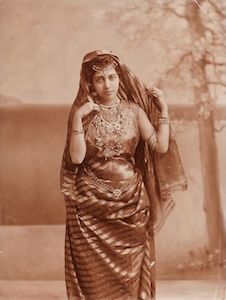
Princess Sophia Duleep Singh 1876-1948
Princess Sophia Alexandrovna Duleep Singh was born on 8 August 1876 at Belgravia, a district in central London.
She was the daughter of Maharaja Duleep Singh, the last recognised ruler of the Sikh Empire of Punjab, and Maharani Bamba Müller, who was of African and German heritage.
Sophia was a member of the Punjab Royal Family, but she and her siblings grew up in exile in England. Her father had been removed from his throne after the British Empire seized the Punjab in 1849, when he was a child. Her father was forced to give up the well-known Koh-i-Noor diamond to Queen Victoria.
Queen Victoria took a personal interest in the family. She was Sophia’s godmother and arranged financial support for them. The family lived at Elveden Hall, Suffolk, an estate purchased for Maharaja Duleep Singh by the British government.
Sophia spent most of her early years at Elveden Hall, where the family lived in relative comfort. After her father left for France and later attempted to return to India, the British authorities placed Sophia and her sisters under the guardianship of Arthur Oliphant, a court official and friend of Queen Victoria.
During her teenage years, Sophia was sent to a private school in Brighton. She attended Miss Parkinson’s Girls’ Day School, located at 39 Dyke Road, Brighton.
She studied there for approximately four years, receiving a traditional upper-class education which included French, music, embroidery, social etiquette, and history.
After her school years, she returned to Hampton Court Palace, where the royal family had been granted grace and favour apartments by Queen Victoria.
In 1907, Princess Sophia made her first and only journey to India.
During this visit, she travelled to the Punjab, where her father had once ruled. She visited important family sites and was introduced to the people and landscape of her ancestral homeland.
Sophia observed the impact of British colonial rule in India, particularly among poor and working-class people. She witnessed the inequalities faced by many Indians living under British administration.
This experience had a lasting influence on her later public activities.
In 1909, Sophia joined the Women’s Social and Political Union (WSPU), founded by Emmeline Pankhurst.
The WSPU was a leading organisation in the suffragette movement, which campaigned for women’s right to vote.
Sophia took an active role. She:
- Sold The Suffragette newspaper outside Hampton Court Palace
- Attended public demonstrations and meetings
- Contributed funds and support to the cause
In the 1911 Census, Sophia refused to complete the official form. Instead, she wrote across it:
“No vote, no census. As women do not count, they refuse to be counted.”
This action was part of a wider civil disobedience campaign by the suffragettes to highlight the lack of voting rights for women.
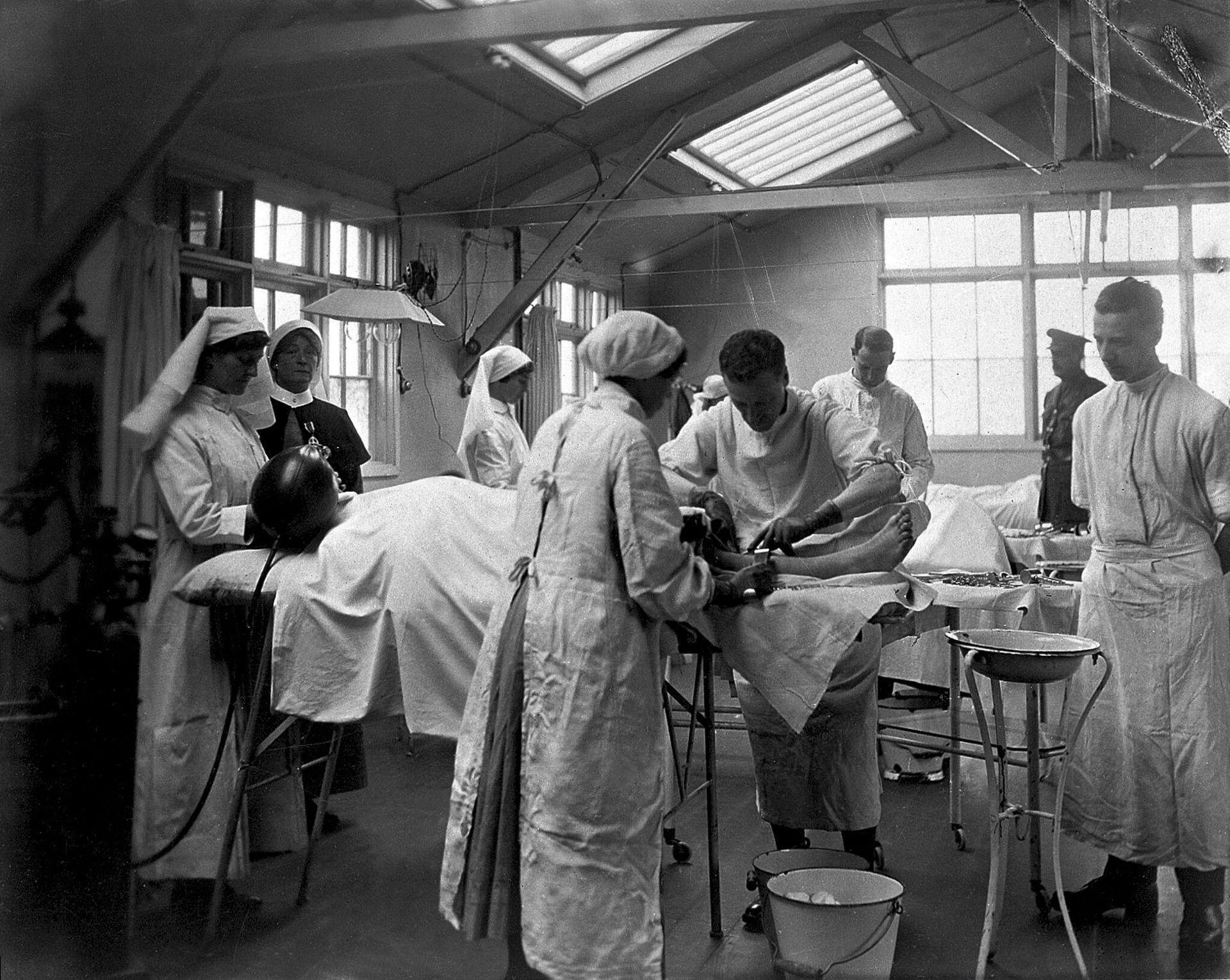
When the First World War broke out in 1914, Sophia shifted her focus to supporting Indian soldiers who were fighting on behalf of the British Empire.
Many of these soldiers were injured and brought to hospitals in Britain, including in Brighton.
The Royal Pavilion, Brighton Dome, and Corn Exchange were transformed into military hospitals suitable for Indian troops.
Princess Sophia:
- Visited the hospitals to speak with and support the wounded
- Helped raise funds through the India Soldiers’ Fund, which paid for medical supplies, gifts, and comforts
- Promoted awareness of Indian soldiers’ contributions during the war
She maintained a steady presence in efforts to care for soldiers from India, especially those recovering from injuries sustained in Europe.
After the war, Sophia became increasingly involved in the movement for Indian independence.
She supported the India League, an organisation in Britain that advocated for self-rule (Swaraj) for India.
She met with prominent leaders, including Mahatma Gandhi, during his visits to London in the 1930s.
Sophia remained unmarried and continued to live at Hampton Court Palace. Though less active in public life than in earlier years, she continued to support political and charitable causes related to India and to racial and gender equality.
Princess Sophia Duleep Singh died on 22 August 1948 in London, shortly after India gained its independence from British rule.
She was cremated, and her ashes were scattered in accordance with Sikh rites.
Her life is remembered for:
- Her support of the suffragette movement in Britain
- Her efforts to improve the welfare of Indian soldiers during WWI
- Her ongoing support for India’s independence
- Her early years of education in Brighton, where she spent a formative period of her youth
References and Sources: