Article
Staying Power: Why Peter Fryer’s History of Black Britain Still Matters
January 14, 2026

A reflection on continuity, presence, and belonging

When Staying Power was first published in 1984, it marked a quiet but decisive turning point in British historical writing. At a time when Black history in Britain was often treated as recent, marginal, or imported, Peter Fryer made a clear and carefully evidenced claim: Black people have been part of Britain’s story for nearly two thousand years.


For readers today, particularly those engaged in local and community history projects, Staying Power remains an essential text. Not because it offers comfort, but because it offers truth rooted in archives, long ignored or deliberately overlooked.


A History That Refuses Erasure

Fryer’s central intervention is deceptively simple. He traces the presence of Africans and people of African descent in Britain from Roman Britain, through the Tudor and Stuart courts, the age of empire, industrialisation, and into the twentieth century.


This is not a history of occasional arrivals and departures. It is a history of continuity.

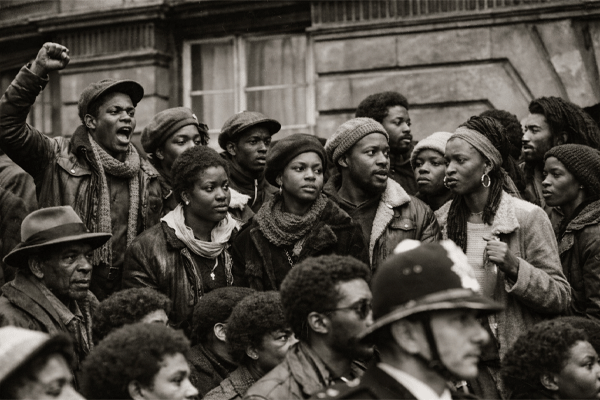
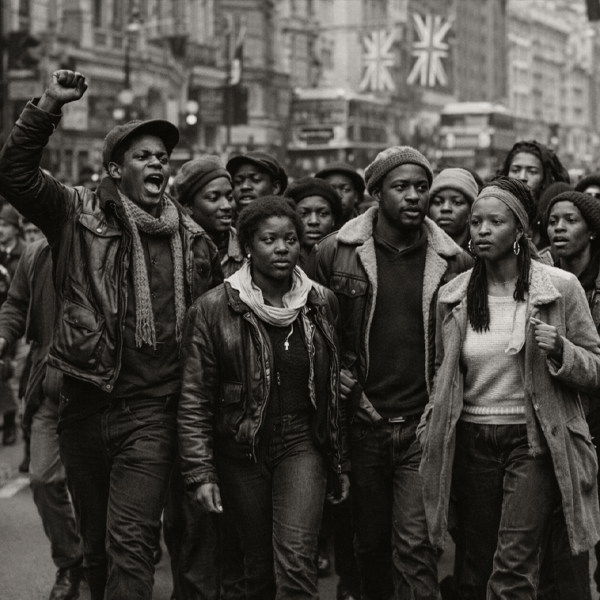
Black soldiers on Hadrian’s Wall. Black servants, musicians, sailors, craftspeople, and writers in Georgian and Victorian Britain. Black communities organising, resisting racism, and shaping political life long before the arrival of the Empire Windrush.


By assembling evidence scattered across parish records, court documents, newspapers, and private correspondence, Fryer demonstrates that Black British history is not an appendix to national history—it is woven into its fabric.


Challenging the “Newcomer” Myth

One of Staying Power’s most enduring contributions is its dismantling of the idea that Black people are a recent presence in Britain. This myth has had powerful political consequences, shaping immigration debates, education policy, and public memory.


Fryer shows how this erasure was not accidental. The growth of empire, slavery, and racial hierarchy demanded a selective memory—one that emphasised British benevolence while minimising Black agency and contribution at home.


For projects like Echoes of Brighton’s Past, this insight is crucial. Local Black histories are often described as “hidden” not because they did not exist, but because they were never considered worthy of preservation.

Class, Labour, and Everyday Life

Writing from a Marxist historical perspective, Fryer pays close attention to labour, exploitation, and resistance. He documents how Black Britons were drawn into the most precarious forms of work—sailors, dock workers, domestic servants—while also highlighting moments of collective organisation and protest.

Importantly, Staying Power does not romanticise endurance. The title itself carries a double meaning: survival in the face of hostility, but also the burden of having to stay in a society that repeatedly questioned Black belonging.


Strengths and Limitations

As a work of its time, Staying Power has limits. Gendered experiences receive less sustained attention than later scholarship would provide, and some communities—particularly women and children—remain harder to see within the archive.


Yet these gaps do not undermine the book’s importance. On the contrary, they underline its role as a foundation upon which later Black British historians have built. Fryer opened doors that had long been locked.

Why This Book Still Belongs on Our Shelves

In an era when Black British history is more visible but still contested, Staying Power offers something increasingly rare: depth without sensationalism. It insists that belonging is not granted by law or popularity, but established through presence, labour, culture, and struggle over time.


For students, educators, and community historians, the book remains a reminder that the work of recovery is ongoing—and that local histories, including those of Brighton and Hove, must be placed within this much longer national story.


Final Thoughts

Staying Power endures because it refuses simplification. It does not ask readers to admire Black British history from a distance; it asks them to recognise it as inseparable from Britain itself.

In doing so, Peter Fryer gave future generations not just a book, but a framework—one that continues to inform how we uncover, interpret, and honour the Black presence in Britain’s past.

Related Articles

Related Articles

By Michael Humphrey February 9, 2026
A reflection on history, memory, and national identity
The Black Jacobins
By Michael Humphrey February 9, 2026
A reflective review of The Black Jacobins by C. L. R. James, exploring the Haitian Revolution, Black resistance, and the book’s lasting significance for Black history studies in Britain.
February 6, 2026
The Delegation and Their Mission