Article
Black and British: Reframing Britain’s Past Through Presence and Power
February 9, 2026

A reflection on history, memory, and national identity

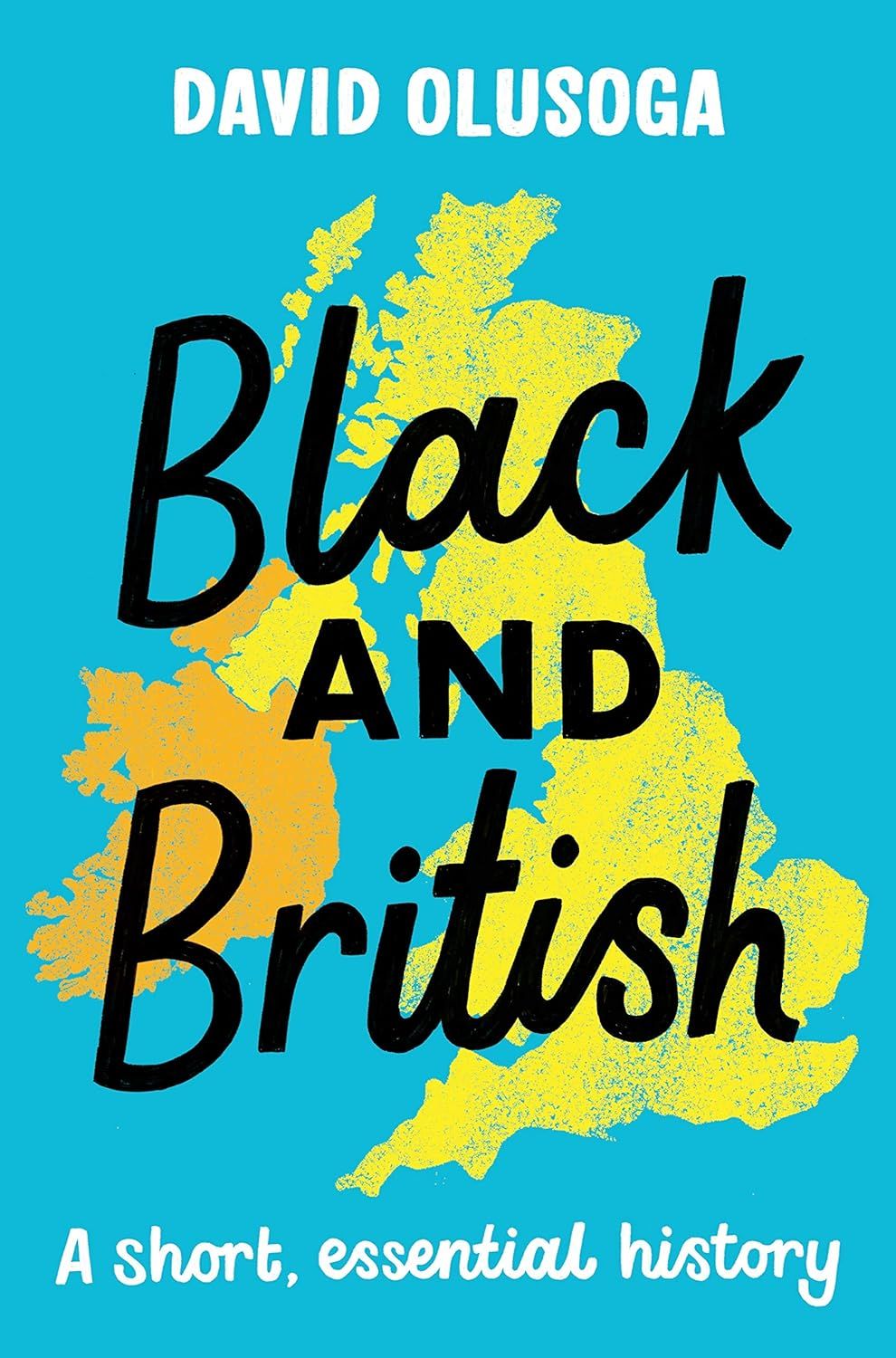
When Black and British was published in 2016, it did more than reach bestseller lists or accompany a major BBC television series. It marked a moment when Black British history moved decisively from the margins of academic study into the centre of public consciousness.

Yet the enduring value of Black and British lies not in its popularity, but in its method: a meticulous reconstruction of British history that insists Black lives, labour, and resistance have always been integral to the nation’s story.


A Long History, Clearly Told

Olusoga traces Black presence in Britain from Roman Britain through the Tudor court, the age of empire, the world wars, and into the post-war period. In doing so, he challenges one of the most persistent misconceptions in British historical thinking: that Black history begins with migration in the mid-twentieth century.


Drawing on court records, military archives, personal letters, parish registers, and visual culture, Olusoga demonstrates that Black people were not anomalies or exceptions. They were soldiers, servants, musicians, sailors, writers, abolitionists, and citizens—often visible in their own time, later rendered invisible by historical neglect.


Empire Brought Home

One of the book’s most important contributions is its insistence that Britain’s empire cannot be understood as something that happened “over there”. The empire shaped Britain itself—its wealth, its institutions, and its racial hierarchies.

Olusoga shows how colonial ideologies travelled back to the metropole, influencing law, science, culture, and everyday life. Racism in Britain, the book makes clear, was not an unfortunate by-product of empire; it was one of its organising principles.

For readers engaged in local history, this reframing is crucial. Black communities in cities and towns across Britain—including Brighton and Hove—did not emerge in isolation. They were formed within imperial systems that connected port cities, military routes, domestic service, and global trade.

War, Citizenship, and Broken Promises

Black and British is particularly powerful in its treatment of the two world wars. Olusoga documents the extensive participation of Black soldiers and workers, and the recurring pattern that followed: service in times of crisis, exclusion in times of peace.


The arrival of the Windrush generation is presented not as a beginning, but as a reckoning—a moment when Britain was forced to confront the contradictions between its imperial past and its national self-image. The subsequent experiences of racism, surveillance, and exclusion are shown as structural, not accidental.


Style, Authority, and Accessibility

Olusoga writes with clarity and restraint. His tone is authoritative without being didactic, and accessible without sacrificing scholarly rigour. This balance explains why the book has been adopted across schools, universities, teacher training programmes, and community education projects.


Unlike earlier works that spoke primarily to academic audiences, Black and British invites a broad readership to reconsider what they think they know about Britain.

Strengths and Silences

No single book can tell every story. Some local experiences and individual lives remain necessarily fragmentary, shaped by the silences of the archive. Women’s histories, while present, still demand further excavation, as do the stories of smaller regional communities.

However, these silences are not failures of the book. They are invitations—clear signposts pointing to the work that remains to be done at local and community level.


Why Black and British Matters for Local History

For projects like Echoes of Brighton’s Past, Black and British provides a national framework within which local stories can be properly understood. It affirms that uncovering Black presence in a particular street, workplace, school, or church is not an act of recovery at the edges of history, but a contribution to its centre.

The book reminds us that absence from the record does not mean absence from the past.


Black and British is not simply a corrective history; it is a redefinition of British history itself. By placing Black lives where they have always belonged—within the nation’s unfolding story—David Olusoga challenges readers to rethink belonging, memory, and responsibility.


In doing so, he equips historians, educators, and communities with both evidence and confidence: the confidence to say that Black British history is not supplementary, optional, or new. It is enduring, foundational, and inseparable from Britain’s past.

Related Articles

Related Articles

The Black Jacobins
By Michael Humphrey February 9, 2026
A reflective review of The Black Jacobins by C. L. R. James, exploring the Haitian Revolution, Black resistance, and the book’s lasting significance for Black history studies in Britain.
February 6, 2026
The Delegation and Their Mission