Article
The Black Jacobins
February 9, 2026

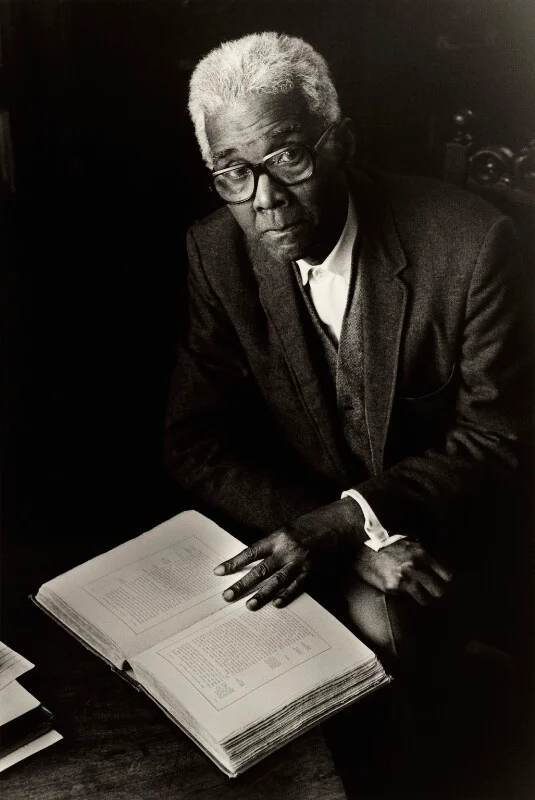
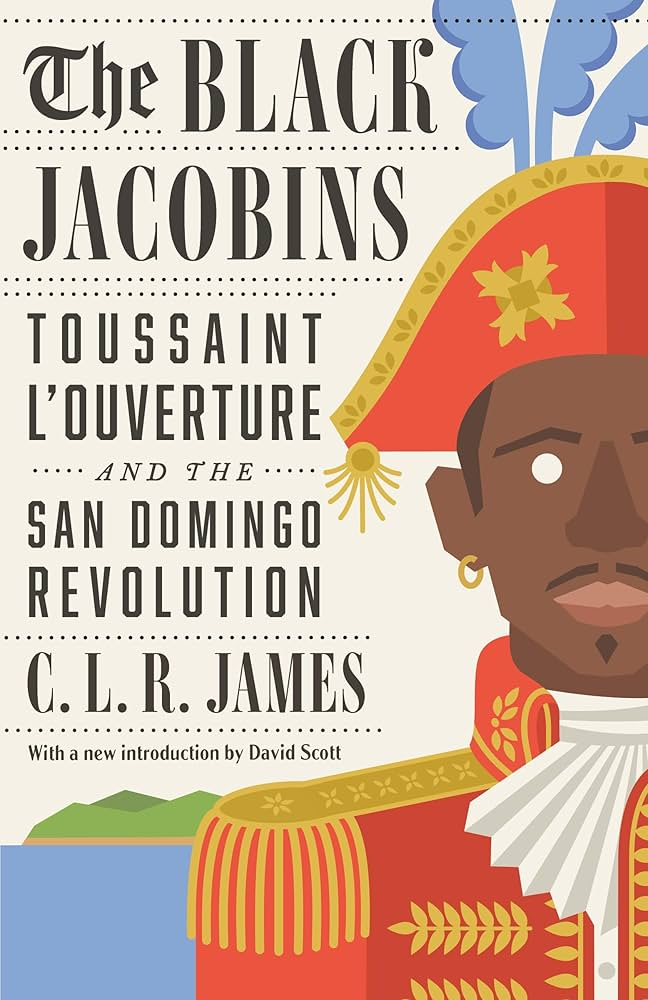
The Black Jacobins by C. L. R. James

First published in 1938, The Black Jacobins stands as one of the most important historical works of the twentieth century. More than a history of the Haitian Revolution, it is a profound re-orientation of how enslaved Africans, colonial power and modern freedom are understood. For students of Black history in Britain, the book occupies a unique position: it dismantles imperial mythologies while insisting that Black political consciousness was central to the making of the modern world.

Overview and Historical Scope

C. L. R. James charts the events of the Haitian Revolution (1791–1804), the only successful slave revolt in history, led by enslaved Africans in the French colony of Saint-Domingue. The revolution culminated in the establishment of Haiti as the first Black republic and the first nation to permanently abolish slavery.

James places Toussaint Louverture at the centre of this story, not as a symbolic figure, but as a complex revolutionary statesman shaped by Enlightenment ideals, African traditions and the brutal realities of plantation slavery. Crucially, James refuses to present the revolution as an anomaly or accident. Instead, he situates it firmly within the age of Atlantic revolutions, alongside France, America and Britain.

Method and Style

One of the book’s enduring strengths is its fusion of political analysis and narrative drama. James writes with the urgency of a novelist and the precision of a Marxist historian. Plantation economies, European diplomacy and military strategy are rendered accessible without being simplified.

For UK students, this approach is often revelatory. Enslaved people are not treated as passive victims awaiting abolition; they are historical agents who organised, theorised freedom and reshaped global power structures. This directly challenges older British historiography that positioned abolition as a moral gift bestowed by Parliament rather than a concession wrested through resistance.


A Challenge to British Imperial Narratives

Although focused on a French colony, The Black Jacobins has profound implications for British history. James makes clear that the wealth, stability and global influence of European powers, including Britain, were inseparable from plantation slavery and colonial exploitation.

A Challenge to British Imperial Narratives

Although focused on a French colony, The Black Jacobins has profound implications for British history. James makes clear that the wealth, stability and global influence of European powers, including Britain, were inseparable from plantation slavery and colonial exploitation.

In a UK educational context, the book unsettles comforting national myths:

  • That freedom flowed naturally from European Enlightenment thought
  • That Black resistance was secondary to white abolitionism
  • That empire was administratively flawed but morally progressive

James exposes these ideas as historically untenable.


Toussaint Louverture and Tragic Leadership

James’s portrayal of Toussaint Louverture is nuanced and, at times, deeply critical. Toussaint is shown as a visionary who nevertheless remained loyal to France longer than circumstances allowed. His belief that emancipation could coexist with colonial rule ultimately proved fatal.

This tragic dimension is central to the book’s power. James does not offer heroic simplicity; instead, he presents revolution as a process shaped by contradictions, compromises and irreversible decisions. For students, this encourages a mature engagement with leadership, power and historical consequence.


Why The Black Jacobins Still Matters in Britain

In contemporary Britain, where debates over empire, memorialisation and Black presence remain deeply contested, The Black Jacobins offers intellectual clarity. It demonstrates that Black history is not marginal or supplementary but foundational to understanding modern Europe.


The book also provides a crucial corrective to curricula that still struggle to integrate Black resistance into national narratives. Its continued presence on UK university reading lists is not due to tradition alone, but because it remains intellectually necessary.


Limitations and Critiques

Some readers note that James’s focus on class struggle and political leadership can underplay gendered experiences and everyday cultural life. Subsequent scholarship has expanded these areas, particularly around Black women’s roles in the revolution. However, these critiques do not diminish the book’s importance; rather, they testify to its role as a starting point for further inquiry.

The Black Jacobins is not merely a history book, it is a demand. It demands that readers reconsider who makes history, how freedom is won and whose voices have been systematically excluded from the record. For Black History studies in the UK, it remains indispensable: rigorous, unsettling and transformative.

For any project concerned with recovering overlooked Black contributions, whether academic, local, or community-based, C. L. R. James’s work continues to offer both a method and a moral compass.

Related Articles

Related Articles

By Michael Humphrey February 9, 2026
A reflection on history, memory, and national identity
February 6, 2026
The Delegation and Their Mission