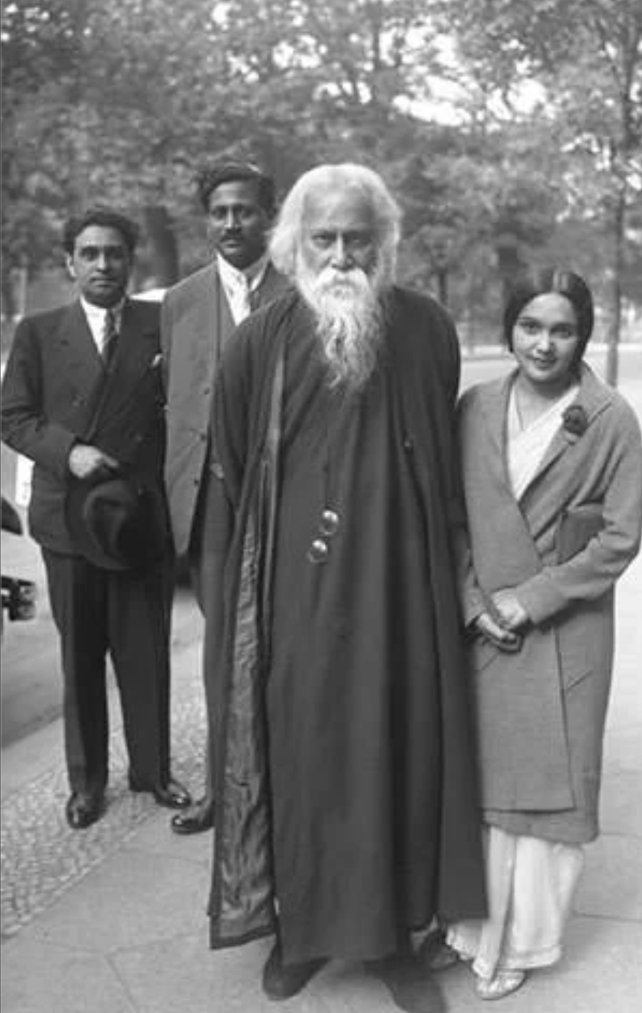
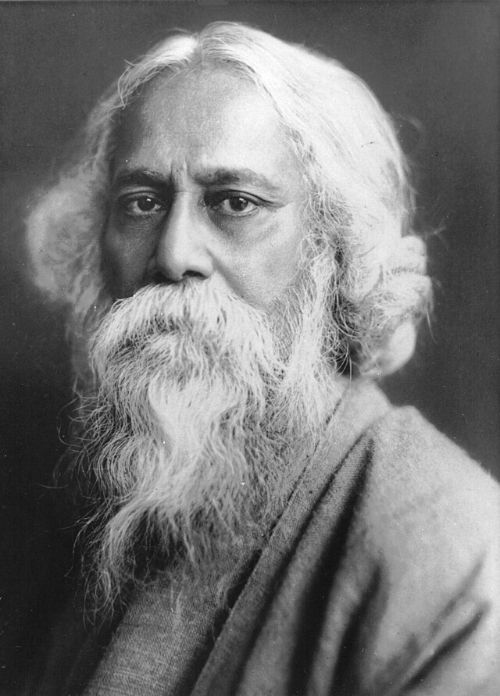
Picture a bright Bengali teenager walking down Ship Street in 1870s Brighton. Rabindranath Tagore was just that boy, far from home, learning English lessons that would one day fuel a literary revolution.
Born in Calcutta in 1861 into a wealthy family of scholars and reformers, Tagore would grow up to reshape Bengali culture as poet, musician, artist and philosopher. In 1913, his collection *Gitanjali* won him the Nobel Prize for Literature, the first non European ever to claim the award. He later rejected a British knighthood in protest at the 1919 Jallianwala Bagh massacre.
A Ship Street schoolboy
Tagore first arrived in England as a child from the 1870s. He lived in nearby Hove and attended the Brighton Proprietary School for Boys at 7 Ship Street. This small day school for local boys sat in the heart of central Brighton, right by what’s now the bustling North Laine. Those classrooms gave the young Tagore his first real taste of English life – chalkboards, cold weather and cricket pitches far from Calcutta’s heat.
Tagore was not alone in being a young person from the wider world sent to this part of England to be educated. In 1892, Princess Victoria Ka'iulani of Hawaii lived in Hove while preparing for a public role that events would soon make impossible. In a different register, Flora Sassoon born in Bombay the same decade Tagore first came here, later made Hove her home and left a lasting mark on its public spaces.
The blue plaque that brings him back
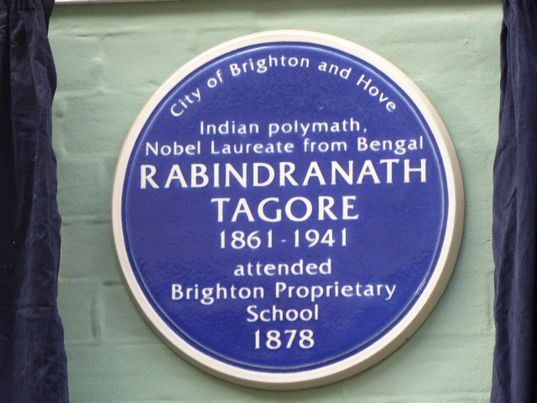
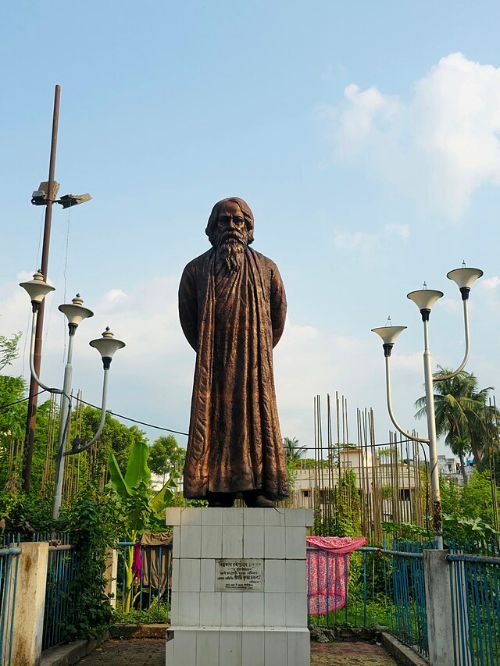
Fast forward to 28 October 2021. Crowds gathered outside No. 2 Ship Street for the unveiling of a blue plaque. The Mayor of Brighton & Hove and the Deputy Lieutenant for East Sussex joined Indian and Bengali communities to celebrate. Local groups provided hospitality, turning the event into a joyful nod to Tagore’s legacy.
The plaque calls him a “world-renowned Bengali polymath” and highlights his Nobel triumph. Today it sits amid Ship Street’s shops and cafés, a quiet reminder that a future literary giant once puzzled over English grammar here.
A creative retreat in Rottingdean
Tagore returned to Sussex in 1912, this time as an established writer. He stayed in Rottingdean, the pretty village east of Brighton, at the home of artist William Rothenstein. Rottingdean was already an artists’ haven, Rudyard Kipling and Edward Burne-Jones had lived there. The peaceful Downs gave Tagore space to write, while Rothenstein championed his poetry in England.
A life of creation
Tagore went on to found Visva-Bharati University at Santiniketan and penned thousands of poems, songs and stories. He died in 1941, leaving a cultural legacy that still shapes Bengal.
Why Tagore lights up Brighton’s past
Ship Street’s plaque doesn’t just mark a schoolboy’s desk – it celebrates a mind that conquered the world from a Brighton classroom. It proves Indian children were learning here in the 1870s, long before modern migration stories. Rottingdean adds a literary spark to the Sussex Downs.
Next time you grab coffee on Ship Street, glance up. That plaque whispers of a boy from Calcutta who started small, then claimed literature’s greatest prize.