Moving sport forward
Before Hove Girls Rugby became a thriving part of club life, it had to be imagined first. It had to be argued for, organised and built. That matters, because opportunities for girls in sport do not simply appear on their own. In Brighton and Hove, one of the people who made that space real was Manjinder Nagra. She is known in rugby as a former England Students player, widely described as the
first Sikh woman to play representative rugby for England at that level. But her local importance lies just as much in what she created afterwards: a pathway for girls at
Hove RFC that helped change who the club could be for.
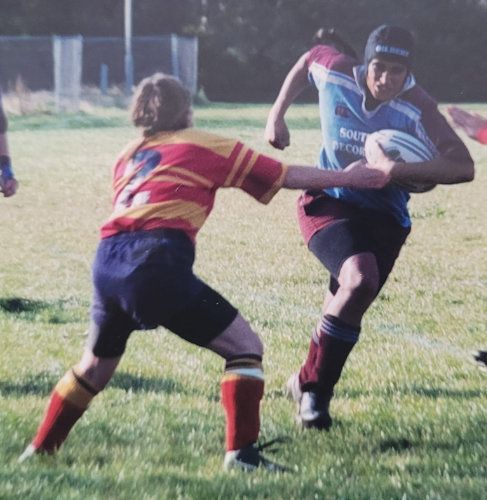
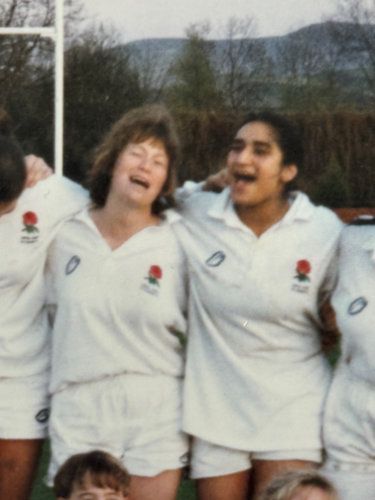
Manjinder’s rugby story began at the University of Bath in the 1990s, where she took up the game and went on to play loosehead prop for England Students. That alone would have marked her out. At a time when Asian women were rarely visible in rugby, she reached a level that few had reached before her. But what gives her story its local weight is what came after.
Hove Rugby Club credits Manjinder with founding the girls’ section, often known as Hove Girls Rugby. She has spoken about wanting to create a proper pathway for girls through the club, so that they were not left without a route forward. What began as a small start grew steadily into something much bigger. Within a decade, the section had expanded into four age groups, helping give dozens of girls a clear place in the game.
That kind of work does not happen by accident. It takes persistence, organisation and belief. It means turning up week after week, encouraging players, recruiting volunteers, supporting families and helping a club change its sense of who it is for. Hove RFC has described Manjinder as a driving force behind the growth of girls’ rugby at the club, and that feels like the right phrase. She did not simply lend her name to the effort. She built it.
More than rugby
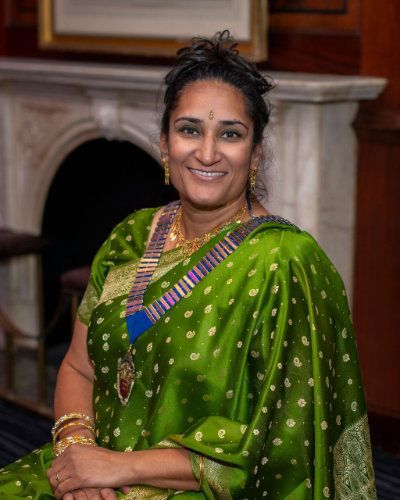
What makes her story especially strong is that rugby is only one part of it. Alongside her work in sport, Manjinder has built a substantial legal career. She has worked for many years as a lawyer, including in the contracts and procurement team at Brighton & Hove City Council, and previously in private practice. In 2023 to 2024, she became President of the Sussex Law Society, the first person of colour to hold that office since the society began in 1860. In 2024, she was also named Commercial and Corporate Lawyer of the Year by the Society of Asian Lawyers.
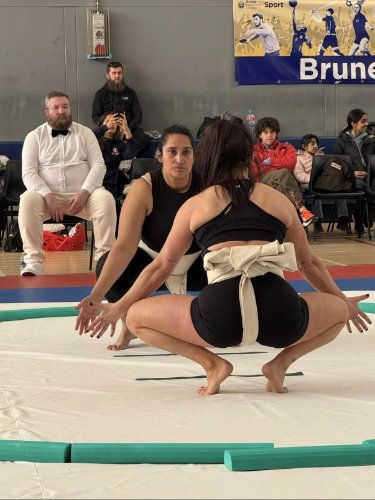
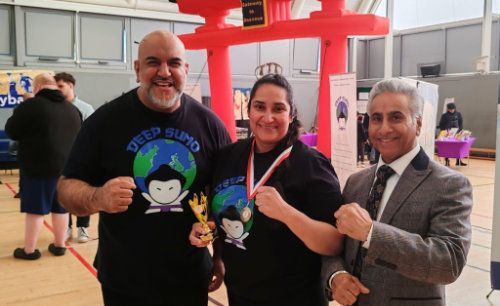
Recent achievements in sumo wrestling add another layer to that record.
In March 2026, she won gold in her weight category and silver in the open division at the
English National Sumo Championships, a competition that earned her a place to represent England at the the European Championships in Stirling later that year. It is a reminder that her story is not simply about what she achieved in rugby years ago. It is also about a continuing readiness to test herself in new arenas, and to remain visible as a sportswoman and leader, and demonstrate the importance of representation in inspiring others.
These are major achievements in their own right, but they also deepen the picture of what she has brought to Brighton and Hove. This is not only a story about someone who cared deeply about one team or one sport. It is the story of someone who has moved between law, sport and public life while keeping a steady focus on fairness, opportunity and representation.
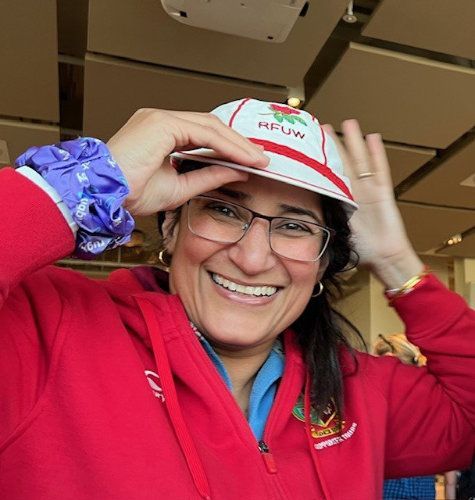
That same spirit can be seen in her wider work around inclusion in rugby. She has helped coach younger players, served on disciplinary panels in Sussex and at national level, and has also been linked with efforts to support the visibility of Asian women in sport. More recently from delivering a taster Walking Rugby session to the Hangleton and Knoll Women’s Multicultural group in January 2025, she coached them to playing their inaugural match in November 2025 and they are still going strong. The through-line is clear enough. Again and again, her public work points towards opening doors and making spaces feel more welcoming to those who have too often been missing from them.
Why she matters in Brighton and Hove
Brighton and Hove have many people who care about sport and community life. What stands out here is the combination of vision and follow-through. It is one thing to have played at a high level. It is another to come back and build something that changes who gets to play next. Hove Girls Rugby did not appear by accident. It grew because someone saw that girls needed a proper pathway and set about creating one.
For a city that often speaks about inclusion, this is what inclusion looks like when it has substance. It looks like girls staying in the game, age-group teams taking shape, barriers being named and challenged, and leadership that carries across more than one part of public life. Manjinder Nagra’s story is not only about being first. It is about making room for others to come through after her.
Sources
- RFU, Celebrating South Asian Heritage Month: Manjinder’s story
- Hove Rugby Club, The first Sikh woman to play rugby for England
- University of Chichester, Honorary Graduates 2025:
Manjinder Nagra