Keeping Brighton’s Chattri Memory Alive
The story begins
Davinder Singh Dhillon’s Brighton story begins with education, but it has grown into something much wider: remembrance, community and the careful keeping of history. A former special education teacher, he is now best known locally for helping protect the memory of the Indian soldiers who died in Brighton during the First World War. Through his work with the Chattri Memorial Group, he has helped turn a quiet place on the Downs above Patcham into one of the city’s most important sites of shared remembrance.
A life rooted in Brighton
Davinder Dhillon was born in Tanzania and came to England in 1967, when he was 14. He moved to Brighton in 1973 to study and has lived in the city ever since. Brighton & Hove Museums describe him as Davinder Dhillon OBE, DL, and record that he worked for more than 30 years as a teacher in special education before retiring in 2012.
That teaching career matters to his story. Before he became widely known for his work around the Chattri, Davinder spent decades working with young people, including children with special educational needs. Local sources link him with Dorothy Stringer School, where he managed a unit for pupils with behavioural, emotional and social difficulties.
It is easy to see a thread running through that work and his later public service. Both involve patience, care and a belief that people should not be pushed to the edge of the story.
The Chattri and Brighton’s Indian soldiers
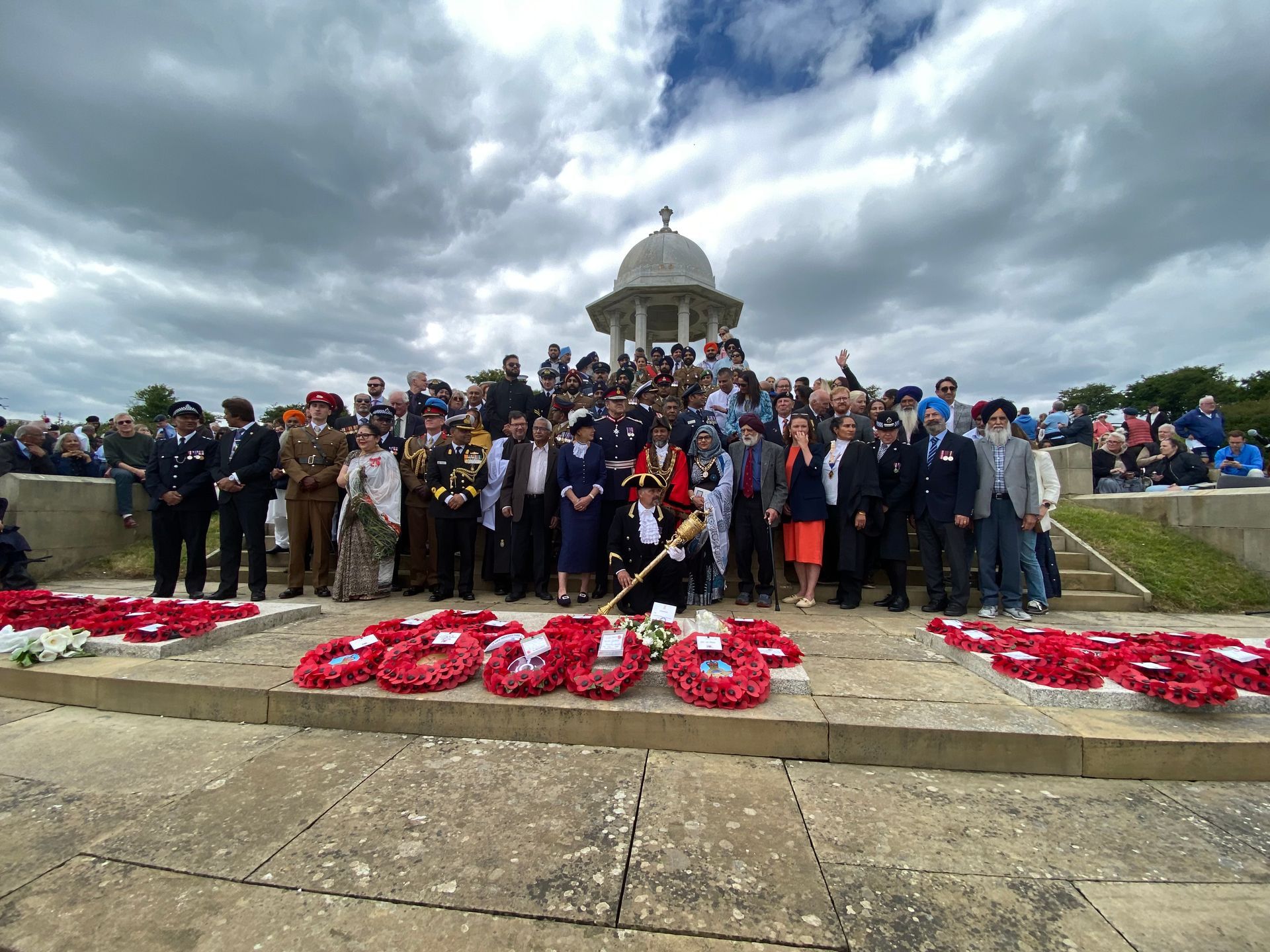
The Chattri Memorial stands on the South Downs above Patcham, north of Brighton. It marks the place where 53 Hindu and Sikh soldiers of the Indian Army were cremated after dying in Brighton hospitals during the First World War. The Commonwealth War Graves Commission explains that the Chattri remembers all Indian soldiers who died during the war, but is especially connected to those 53 men cremated on the Downs.
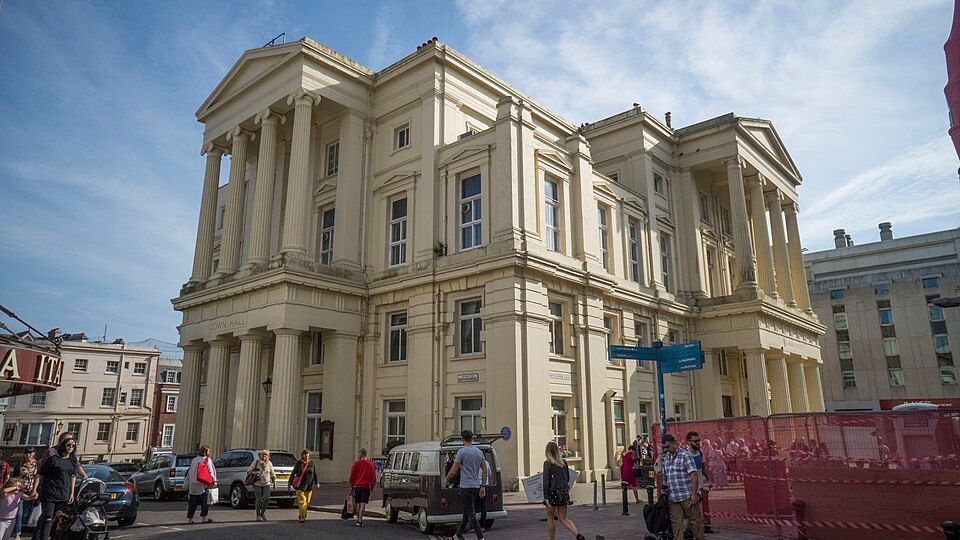
Brighton had a special place in this history. During the war, wounded Indian soldiers were treated in temporary hospitals across the town. The Royal Pavilion, the Dome and the Corn Exchange became part of that medical network. This is one of the most powerful and sometimes overlooked chapters in Brighton’s wartime past: men from India, many wounded on the Western Front, recovering in buildings better known today for royal pleasure, performance and civic life.
The Chattri itself is a small memorial with a large meaning. Its name means “umbrella” in several South Asian languages, and its domed form reflects that idea of a canopy. South Asian Heritage Trust notes that the memorial commemorates 53 Indian soldiers, 37 Hindu and 16 Sikh, and that it stands in the South Downs National Park.
Keeping the service alive
By the end of the twentieth century, the annual remembrance connected with the Chattri was at risk of fading. Davinder Dhillon stepped forward and helped revive it. The Chattri Memorial Group records that, after hearing the Chattri pilgrimage had come to an end, Davinder became involved in renewing the act of remembrance.
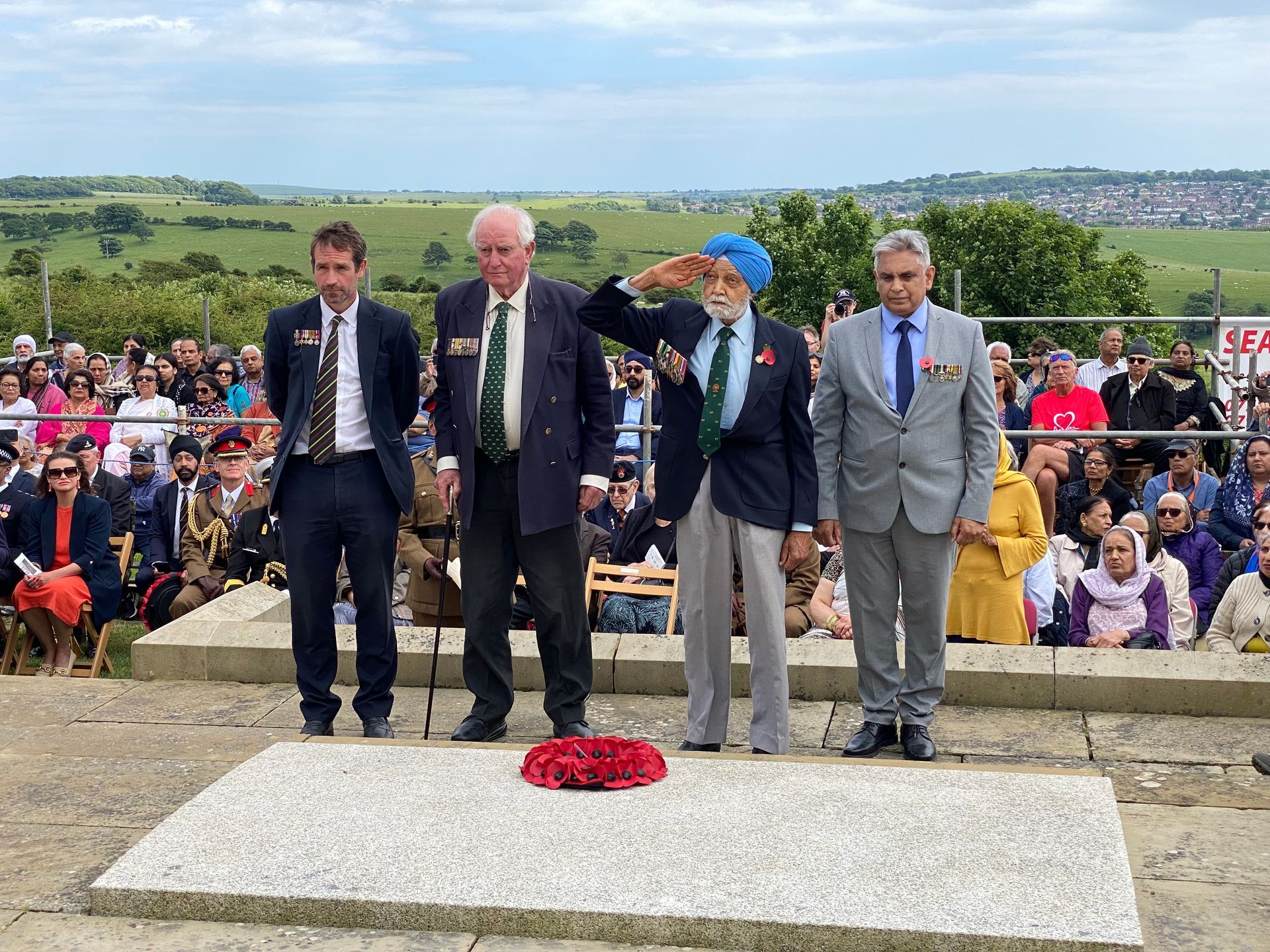
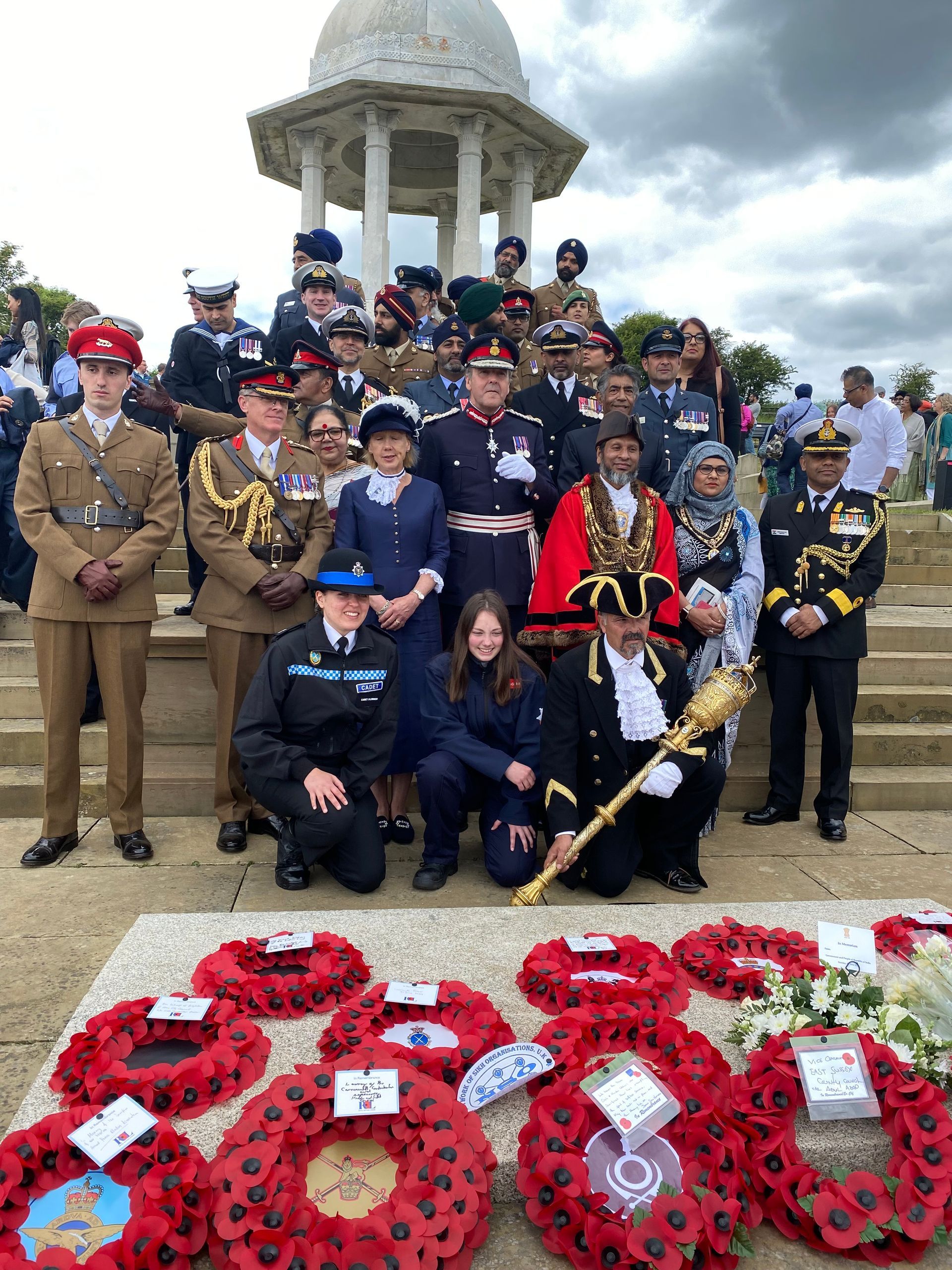
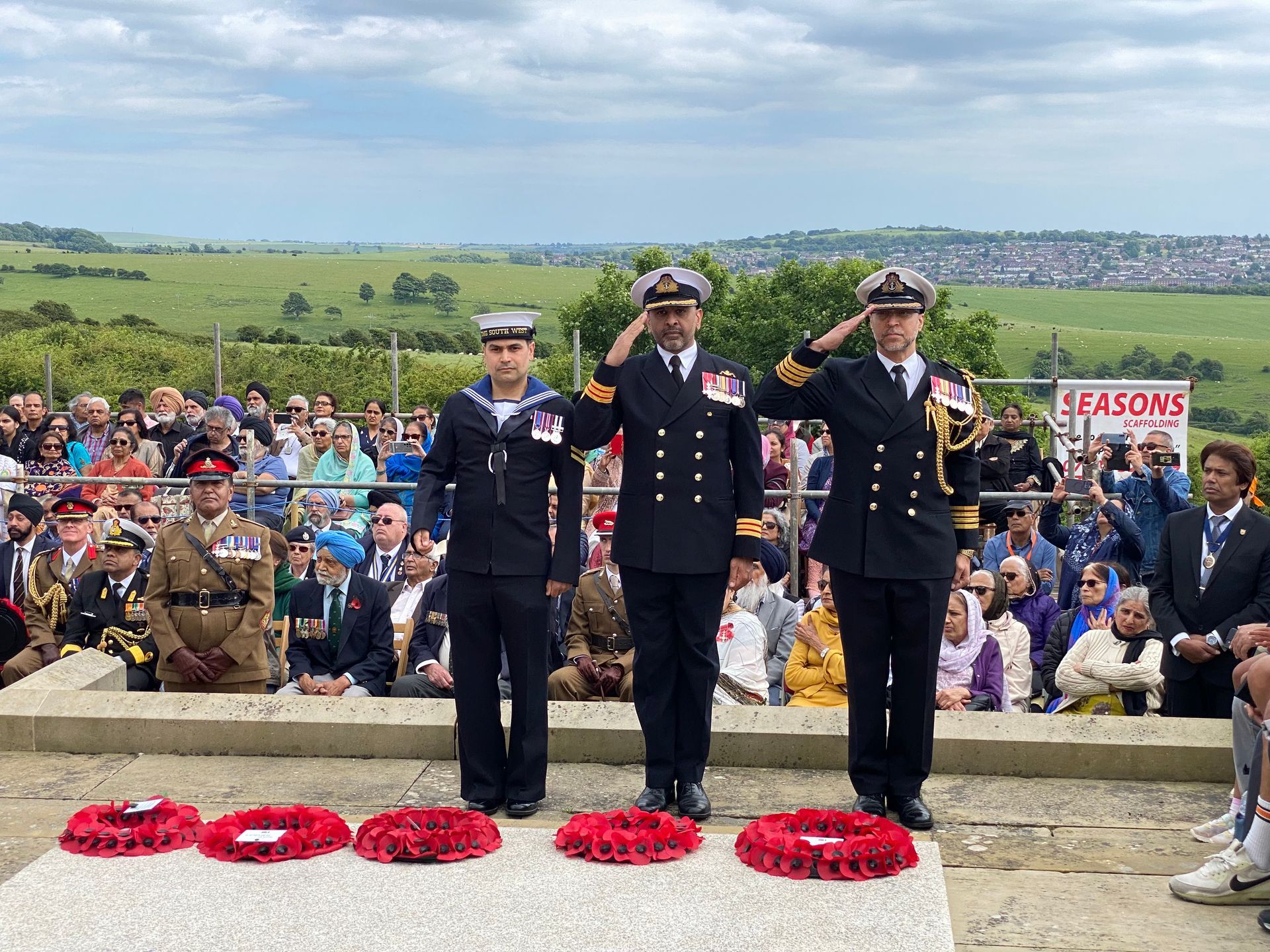
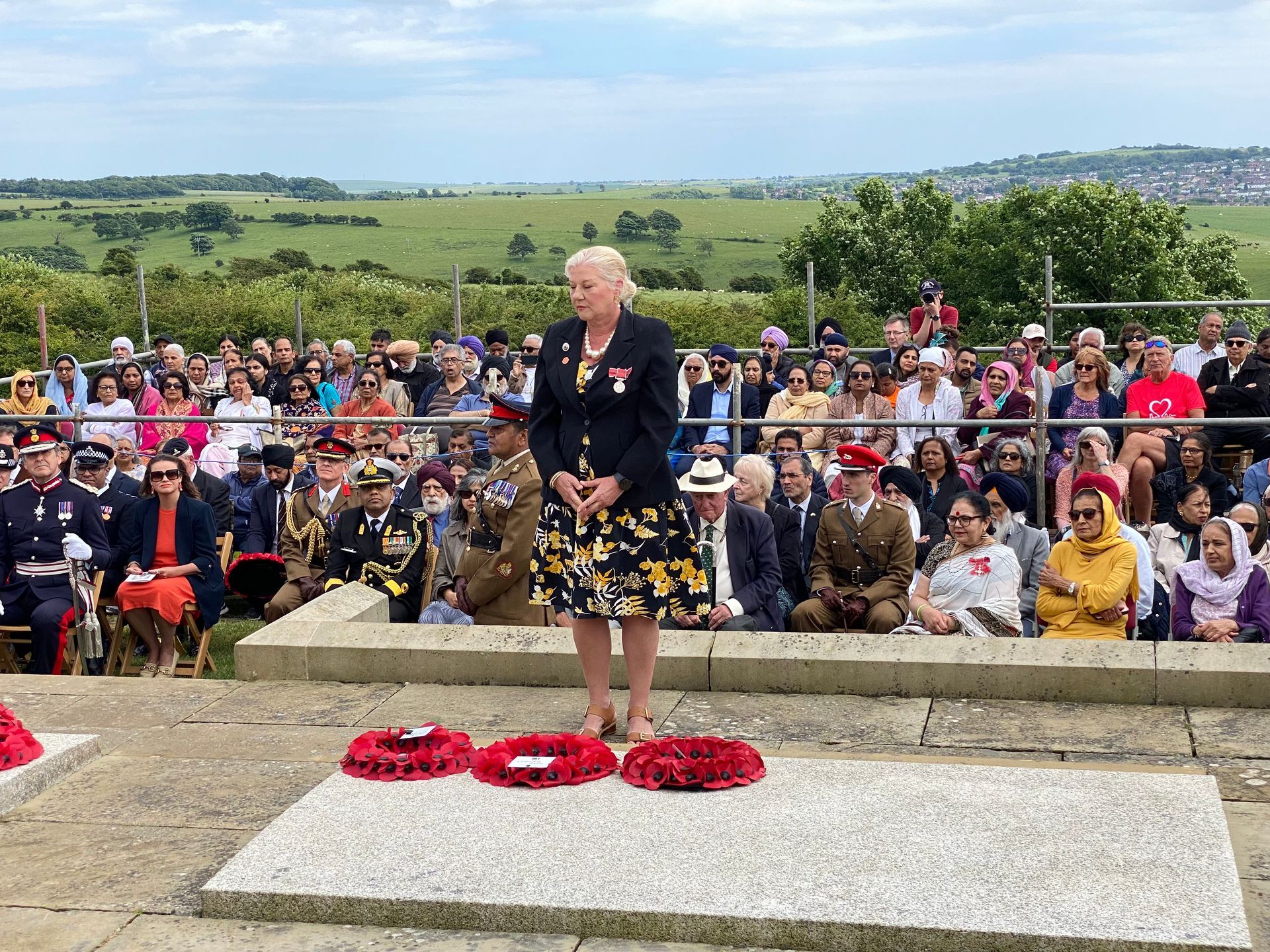
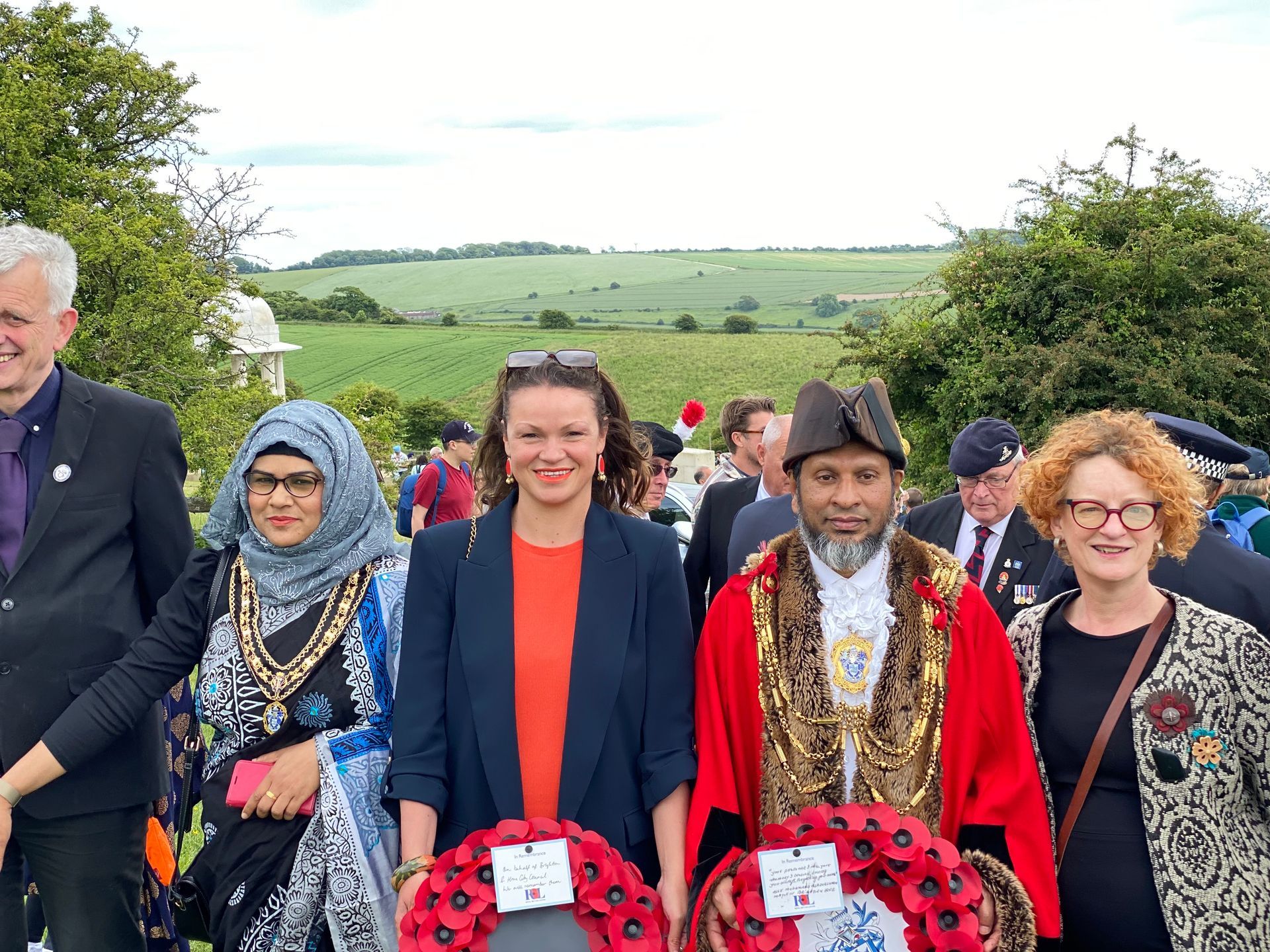
Since then, he has chaired the Chattri Memorial Group and helped organise the annual Chattri Memorial Service. The service usually takes place in June and brings people up to the Downs to remember the Indian soldiers who died in Brighton. It includes civic, military and faith elements, with Sikh, Hindu, Muslim and Christian communities represented. The Prime Minister’s Points of Light award page says Davinder organises an annual interfaith service that brings together around 500 people from different communities.
This is what gives his work such local importance. The Chattri is not only a monument. Through the annual service, it becomes a place where Brighton remembers properly. It gives the city a way to honour men whose names and stories were too often missing from the wider public memory of the First World War.
A Brighton story with wider meaning
Davinder’s work has helped connect different parts of Brighton’s history: the Royal Pavilion as a wartime hospital, the South Downs as a place of cremation and remembrance, and the city’s present-day South Asian communities as active keepers of that memory.
That work also sits naturally beside other community heritage work in Brighton and Hove. Like the work of Brighton & Hove Black History, co-founded by Bert Williams and Sarah Naomi Lee, it asks the city to look again at its past and notice the people who were always there, but not always properly remembered. Sarah Naomi Lee’s local heritage work has also focused on helping Brighton tell a fuller story of its communities and histories.
This is where Davinder’s story becomes more than a personal profile. It is about how public memory is made. It is about who notices when a tradition is slipping away, who gathers people together, who keeps turning up, and who makes sure the next generation understands why a place matters.
Recognition for public service
Davinder Dhillon’s work has been recognised locally and nationally. In 2017, he received the Prime Minister’s Points of Light award for his work with the Chattri Memorial Group. The official citation described him as Chair of the group and recognised his role in commemorating Indian soldiers who died in the First World War.
In the 2022 New Year Honours, he was appointed Officer of the Order of the British Empire. The Gazette records the honour under the name Davinder Singh Dhillon, Chair of the Chattri Memorial Group, for services to the commemoration of Indian Forces’ contribution in the First World War.
He is also a Deputy Lieutenant of East Sussex and a trustee of the Royal Pavilion and Museums Trust. The Charity Commission lists Davinder Dhillon DL as a trustee of the Royal Pavilion and Museums Trust from 1 January 2020. This role brings his story back to one of the key places in the Chattri history: the Royal Pavilion, where wounded Indian soldiers were treated during the war.
Why Davinder Dhillon matters to Brighton
Brighton often tells its history through the seafront, the Pavilion, entertainment, protest and creativity. Davinder Dhillon’s work reminds us that the city’s story is also held in quieter places: a path across the Downs, a white memorial above Patcham, an annual service in June, a group of people gathering to say that these soldiers must not be forgotten.
His contribution is not only that he helped organise an event. It is that he helped keep a door open between past and present. Through the Chattri Memorial Service, Brighton is asked to remember that Indian soldiers were part of the city’s First World War history, that their sacrifice was real, and that their story belongs here.
Davinder Dhillon’s legacy is found in that act of keeping faith with memory. Year after year, the service continues. People climb the hill, wreaths are laid, prayers are said, and Brighton’s history becomes a little fuller because someone cared enough to keep it alive.
Sources
- Brighton & Hove Museums, Trustees: Davinder Dhillon OBE, DL
- The Gazette, Davinder Singh Dhillon OBE notice
- Points of Light, Indian War Memorial: Davinder Dhillon
- Commonwealth War Graves Commission, Investigating the Chattri Memorial and India’s World War One connection
- Chattri Memorial Group, Brighton Remembers: The Chattri
- South Asian Heritage Trust, Chattri Memorial
- Charity Commission, Royal Pavilion and Museums Trust
Related Articles
Related Articles