Suchi Chatterjee: following the stories others miss
Suchi Chatterjee and the work of making Brighton look again
Some people have a way of finding the thread that everyone else has walked past.
That is one of the things Suchi Chatterjee seems to do so well. Her work moves between research, writing, public history and creative interpretation, but the thread running through it is steady: she pays attention to the people and stories that have been left out, then finds a way to bring them back into view.
In Brighton, that has meant helping uncover histories tied to slavery, empire, race, disability and public memory. Brighton Dome describes her as a Brighton-based playwright and journalist, while Brighton & Hove Museums describe her as a “biracial inclusion researcher for Brighton and Hove Black History Group”. You can see those descriptions in Brighton Dome’s Heritage Stories: Reveal and Brighton & Hove Museums’ Three Extraordinary Lives.
The Thomas Highflyer story
A lot of her Brighton work circles around stories that are local in one sense and much bigger in another. The Thomas Highflyer story is the clearest example.
In her article for The Latest, Chatterjee tells the story of Thomas Malcolm Sabine Highflyer, a child rescued from a slave dhow who later lived, went to school and died in Brighton. She writes it in a way that keeps the detail clear without losing the human weight of it: the grave in Woodvale, the school at St Mark’s, the sense that this child’s life forces Brighton to look again at its own place in a wider imperial history. That piece can be read in The Latest’s Tom Highflyer Project.
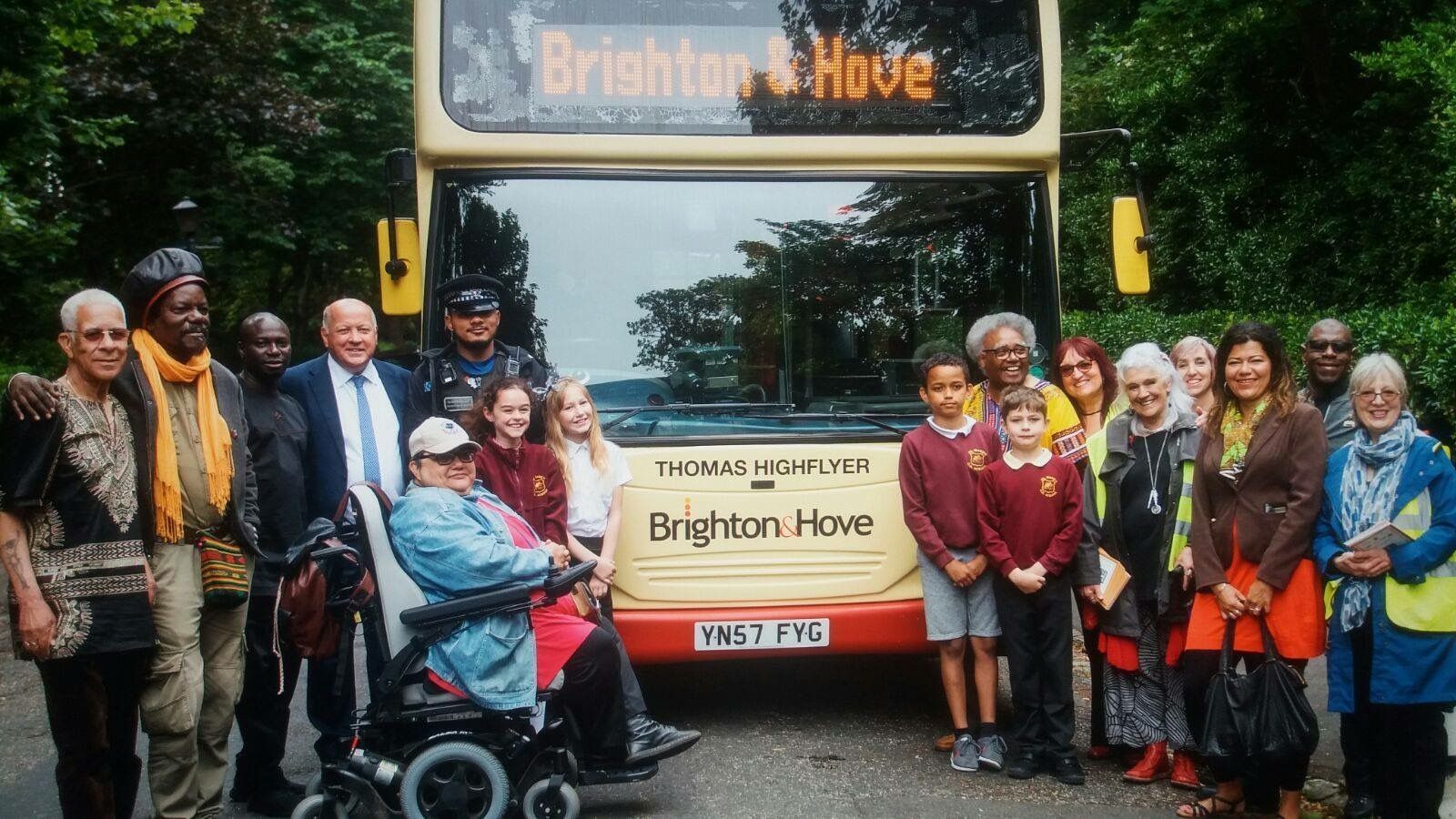
What makes that work especially important is that she was not simply writing from the outside. Her role sits inside the wider Thomas Highflyer project and its public afterlife. Brighton & Hove Buses’ Black History Month tour page says that Suchi Chatterjee and Dr Bert Williams led and narrated the 2024 city-wide bus tour on the Thomas Highflyer bus. Earlier coverage of the heritage bus also credited Bert Williams as narrator with additional material from Chatterjee as Black history researcher. That places her both in the research and in the public telling of the story, which is often where local history either comes alive or falls flat. These parts of the story are reflected in Brighton & Hove Buses’ Black History Month Bus Tour page and Scene Magazine’s coverage of the heritage bus.
Beyond one Brighton story
But Thomas Highflyer is only one part of the picture. Chatterjee’s work also stretches into projects that connect Brighton to African political history more directly.
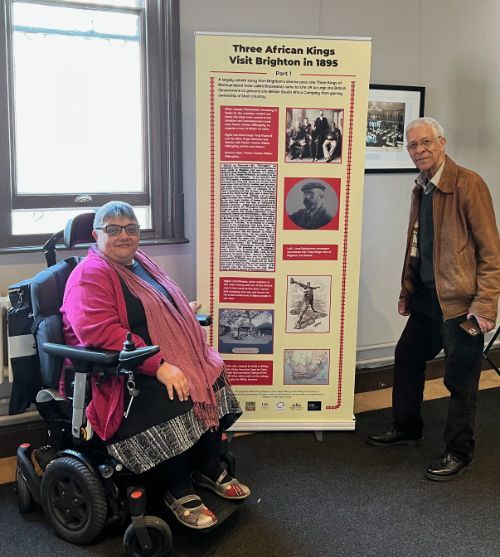
The schools resource on the 1895 visit of Khama III, Bathoen I and Sebele I to Brighton named her as lead historian. That matters because it shows her not just as a contributor but as someone trusted to shape the historical frame of the project. The reporting around it also makes clear that this work grew out of earlier research connections, including Making African Connections, which linked Sussex and Kent museum collections with questions about colonial histories and decolonial futures. You can see that in reports from the Sussex Express and Scene Magazine.
That wider reach is worth holding onto, because it stops the picture becoming too narrow. Yes, she is deeply connected to Brighton and to Brighton & Hove Black History, but her interests are broader than one organisation and broader than one city story. The University of Brighton Centre for Design History describes her as someone involved in in-depth research into Sussex’s rich and diverse past, and notes her contribution to projects ranging from Fragments in Time and Black Georgians to Fashion City Africa, Thomas Highflyer Grave Restoration, Three Kings in Brighton, and the 2021 report Making African Connections: Decolonial Futures for Colonial Collections. That wider body of work is outlined by the University of Brighton Centre for Design History.
Creative history in public
There is also a creative side to her work that feels important. Brighton Dome’s “Heritage Stories – Reveal” programme commissioned local artists to bring forward lesser-known stories connected to the Dome’s heritage, and Chatterjee’s contribution was Blind Tom. In it, she focused on the life of Tom Wiggins, the blind African American musical prodigy, and the Dome hosts her report Blind Tom: A Musical Prodigy as part of the project. This matters because it shows her working not only as a researcher but as an interpreter, someone able to take difficult or neglected histories and make them legible in a cultural setting. That project is part of Brighton Dome’s Heritage Stories: Reveal.
The same is true of her work with Brighton & Hove Museums. Her piece Three Extraordinary Lives, written after a talk at the Royal Pavilion during Disability History Month, brings together Billy Waters, Tom Wiggins and Princess Sophia Duleep Singh. It is not just an interesting set of biographies. It shows her interest in the way race and disability can sit together inside histories that museums have often told in narrower ways. That work appears in Brighton & Hove Museums’ Three Extraordinary Lives.
So while Brighton & Hove Black History is an important part of her story, it is not the whole of it. It is one of the places where her work has had a visible local impact, alongside her museum writing, heritage commissions and broader research interests in Black, diasporic and disability histories. It is also work that has grown through collaboration, including with Ebou, Sarah Lee and Amy, reflecting the shared effort behind much of Brighton’s public Black history work.
That is probably why her work stays with people. It does not feel like history at arm’s length. It feels close to the ground. A grave in Woodvale. A bus leaving Brighton Dome. A museum talk that opens a different door into the Pavilion. A school resource that reminds local children that African political history is part of Brighton’s story too.
Once those links are made, they are hard to unsee. A good place to return to that thread is
The Latest’s Tom Highflyer Project.
Related Articles
Related Articles