Bringing Windrush Women into Brighton’s Archive
Stories that should not go back into storage
Pauline Rutter’s work often begins where stories are at risk of being put away. In Brighton, that meant gathering the histories of Windrush-era women, bringing them into public view, and asking people to see those lives not as footnotes, but as part of the making of modern Britain. Her installation Lifting Us Up: Saluting Our Sisters gave Brighton Museum a way to hold those stories in the open, linking image, text, archive and memory with the living presence of local community history.
Stories that should not go back into storage
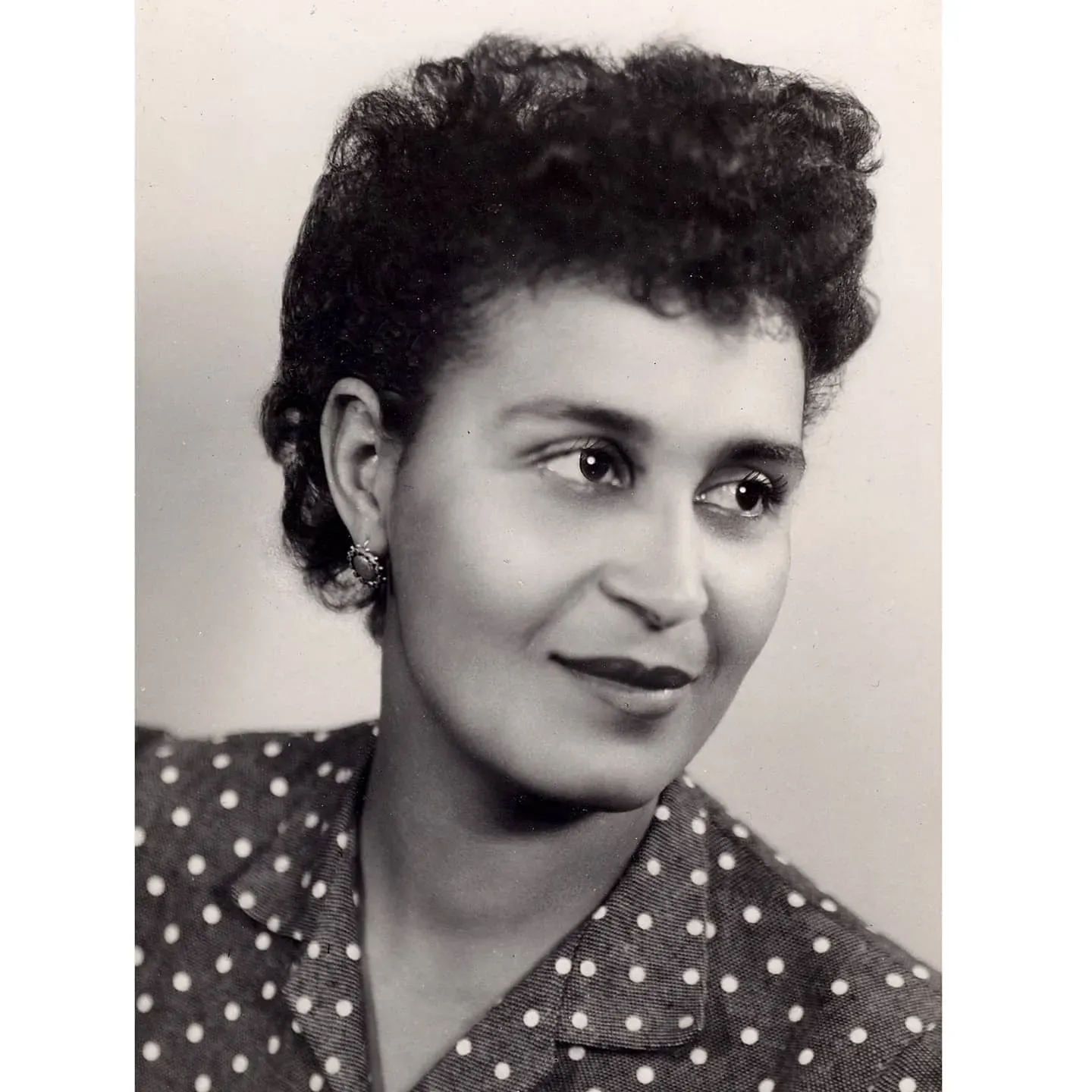
Lifting Us Up: Saluting Our Sisters was first shown in Brighton during the Windrush 75 celebrations in June 2023. The work focused on women of the Windrush generation and beyond: community organisers, activists, artists, campaigners, carers, educators and cultural workers whose lives helped shape Black Britain.
After its first showing, the installation might easily have disappeared from public view. Instead, Brighton & Hove Museums found space for it at Brighton Museum & Art Gallery, where it was displayed from October 2023 to January 2024.
That decision mattered. Museums are not only places where old things are kept. They also help decide which stories a city learns to value. By bringing Pauline’s work into Brighton Museum, these women’s lives were given a public place in the city’s memory.
The installation drew on several archives and collections, including Brighton & Hove Black History, Brighton Design Archives, the Institute of Race Relations, the N15 Archive and the Friends of the Huntley Collection. Through those sources, Pauline brought together fragments of a much wider story: Black women organising, creating, caring and leading, often without the recognition they deserved.
Windrush women and the work of memory
The Windrush story is sometimes told in broad terms: ships, migration, work, racism, settlement and change. Those things matter. But Pauline’s work asks us to look more closely at the women inside that history.
Women held families together, built community groups, worked in hospitals, schools, transport and public services, challenged racism, made art, raised children and opened doors for others. Much of that work was practical and everyday, which is one reason it has so often been under-recorded.
Lifting Us Up did not treat these women as background figures. It placed them at the centre.
For Brighton and Hove, that has a particular importance. The city has long been shaped by migration, empire, seaside labour, public service, creativity and protest. Yet the Black women who helped build community life here and across Britain have not always been easy to find in official records. Pauline’s work helps repair that absence.
It is not simply about looking back with admiration. It is about asking what kind of record we are leaving for the future.
Brighton & Hove Black History and local connection
One of the reasons Pauline’s Brighton work feels so rooted is its connection to local Black history networks. Lifting Us Up drew on Brighton & Hove Black History, whose work over more than two decades has helped the city tell a fuller story of its past and present.
That link matters because community archives often hold what formal institutions miss. They carry names, photographs, memories, event records, family knowledge and the patient work of people who knew these stories were worth keeping before others recognised their value.
Pauline’s work sits naturally beside that tradition. It is archival, but not distant. It is careful, but not cold. It treats memory as something living, held by people as much as by documents.
There is also a direct link with Windrush community work in Hove. At the 2024 Windrush Community Day at Hove Museum of Creativity, Pauline provided Windrush-era photographs for the display area. Shirley Williams, one of the women featured in a photograph from Pauline’s installation, attended the event with Bert Williams MBE of Brighton & Hove Black History.
Moments like that show what public history can do at its best. A photograph on display is not just an image. It can be a meeting point between past and present, between archive and person, between family memory and public recognition.
A living archive, not a closed box
Pauline is often described as an archival artist, poet, writer and cultural worker. Those words give a sense of the range of her practice, but they do not fully capture the feeling of the work.
Her approach to archives is not about locking history away. It is about bringing it into conversation.
That can mean visual art. It can mean poetry. It can mean workshops, oral history, walks, research, public talks or shared community spaces. Across these forms, Pauline’s work returns to a simple but powerful idea: history lives through people.
This can also be seen in The Black Living Archive, a collaborative ONCA residency in Brighton involving Pauline Rutter, Niamh Rutter and Bo Rutter. The project explored Black diasporic past, present and future histories, and treated archive work as something active, shared and intergenerational.
That word, living, is important. It suggests that an archive is not only a store of what has gone. It can also be a place where people recognise themselves, ask questions, and carry knowledge forward.
Windrush Era and Beyond
Pauline’s work with Brighton & Hove Museums has continued through the Windrush Era and Beyond project. The project shares the stories of Windrush-era migrants and their descendants, giving people space to reflect on heritage, family, identity and belonging.
As part of this work, Pauline led storytelling workshops and carried out oral history interviews. This is quiet work, but it matters deeply. Oral history can hold what paperwork often leaves out: tone of voice, feeling, humour, hurt, pride, hesitation, and the small details that make a life real.
For schools and future learners, this kind of work is especially valuable. It helps move Black British history away from a narrow set of dates and into the lives of people who made homes, raised families, faced barriers and changed the places around them.
In Brighton and Hove, it means that Windrush history is not treated as something that happened somewhere else. It becomes part of the city’s own record.
Archives, design and anti-racist knowledge
Pauline’s work also connects with the University of Brighton Design Archives and the Centre for Design History. In 2024, she gave a talk connected to the Institute of Race Relations’ Race & Class journal covers, looking at the role of design in anti-racist, grassroots and academic knowledge.
This may sound specialist, but the idea is easy to understand. Design shapes how knowledge travels. A cover, a poster, a leaflet or an exhibition panel can influence who pays attention, who feels invited in, and how seriously a subject is taken.
For Black history work, this matters. The way stories are presented can either hide people again or bring them properly into view.
Pauline’s practice recognises that archives are not neutral piles of paper. They are shaped by power, care, access and choice. Her work asks who collected the material, who was left out, who gets to interpret it, and how it can be shared with the communities it belongs to.
From collections to the South Downs
Pauline’s work also reaches beyond museum walls and into the Sussex landscape.
Through From Collections to Connections, part of Writing Our Legacy’s work with Changing Chalk, Pauline helped Black and minoritised young people, families and communities explore the chalk landscapes of the South Downs. The project brought together walks, discussion, poetry, illustration and collections research.
This is a different setting from Brighton Museum, but the questions are connected.
Who feels welcome in the countryside?
Who sees themselves in nature writing, museum collections or heritage trails?
How can the South Downs be read through more than one history?
The South Downs are often described through beauty, walking routes, wildlife and views. Pauline’s work adds another layer. It asks how landscape, race, memory and belonging meet. It reminds us that nature and heritage are not separate from people’s lives.
For Sussex, this is an important shift. Black history is not only found in city streets, migration records or community centres. It is also present in how people move through fields, paths, plants, chalk, archives and shared outdoor spaces.
Why Pauline Rutter’s work matters
Pauline Rutter’s work matters because it helps Brighton and Sussex remember differently.
She brings attention to women whose work shaped Black British life but was too often under-recorded. She connects community archives with museums. She uses art and poetry to make research feel human. She treats oral history as a form of care. She opens up the South Downs as a place where Black and minoritised communities can explore memory, nature and belonging.
Most of all, her work resists disappearance.
In a city like Brighton, where history is often told through grand buildings, seaside leisure and well-known names, Pauline’s practice asks for a wider view. It asks us to notice the organisers, mothers, artists, educators, campaigners and community builders. It asks us to value the records held in families and community groups. It asks us to understand that heritage is not only what survives by accident, but what people choose to protect.
Through Lifting Us Up, The Black Living Archive, Windrush Era and Beyond, and her work across Sussex, Pauline Rutter helps keep those stories in motion. Her work does not close the archive. It opens the door.
Souces:
Brighton & Hove Museums: Lifting Us Up: Saluting Our Sisters
Brighton & Hove Museums: Displaying Lifting Us Up: Saluting Our Sisters
Brighton & Hove Museums: Windrush Community Day 2024
Brighton & Hove Museums: Windrush Era and Beyond: Exploring Our Stories
Writing Our Legacy: Pauline Rutter profile and Changing Chalk work
National Trust: Changing Chalk partnership
National Trust: To Exist Here: From Collections to Connections, by Pauline Rutter
Kew: From Seeds to Skylarks
Democratic Society:
Writing Our Legacy: Covert Literary Magazine, Edition 3
Related Articles
Related Articles