Brighton's Theatre Royal formed part of a Black actor's British career, with appearances recorded more than twenty years apart.
Ira Aldridge was still near the beginning of his British career when he performed in Brighton in December 1825. The Black American actor would become celebrated for Shakespearean roles, especially Othello. Brighton was one of the places where he built that career, and he returned to its Theatre Royal more than twenty years later.
That return gives his local story some depth. Aldridge was a working actor coming back to a town with an established theatre audience, bringing a repertoire that crossed tragedy and comedy. The records allow us to follow him beyond a single celebrated visit.
Ira Aldridge's early Brighton appearances
Born in New York in 1807 to free African American parents, Aldridge came to Britain in 1824. He began performing in London, where his talent attracted attention alongside racist criticism. Provincial theatres offered further opportunities, and Brighton became part of his touring life.
Theatre historian Bernth Lindfors cites the Brighton Gazette of 15 December 1825 in his research into Aldridge's early career. Aldridge was then using the stage name Keene. Publicity surrounding him could exaggerate his previous success or describe his origins inaccurately. The claims printed around a performance need to be read as advertising as well as biography.
Othello became one of his best-known roles. A Black actor playing Shakespeare's Moor challenged theatrical conventions in which white actors routinely darkened their faces for the part. Yet Aldridge's career also depended on a much wider range of work than the role most often attached to his name.
Back at the Theatre Royal in 1846
The University of Toronto's JUBA research database records Aldridge performing at Brighton's Theatre Royal in September 1846. Its entry for 10 September lists The Slave and The Virginian Mummy, identifying him as Gambia in The Slave.
The records point to two useful sources: a report in The Era of 13 September 1846 and the Brighton Theatre Royal index in the University of Bristol's Kathleen Barker Collection. These references place him within the theatre's working programme, alongside the other plays and entertainments offered to local audiences.
Following the Brighton evidence
1825: early Brighton appearances, recorded in theatre scholarship and a local newspaper reference. 1846: a return to the Theatre Royal, with programme details preserved in an academic research database.
Tragic characters, comic roles and plays shaped by racial stereotypes could appear within the same performer's repertoire. To understand Aldridge's working life, we have to keep that mixture in view. Success did not mean that the parts or the publicity surrounding them were free of prejudice.
A Brighton stage within a larger career
Aldridge also used his public standing to speak against slavery. The National Portrait Gallery's account describes his campaigning alongside his acting and theatre management. We should not assume that a particular anti-slavery speech took place in Brighton without a record of it, but that commitment forms part of the man who appeared here.
Brighton's audiences encountered Black performers through different kinds of public entertainment. In 1856, Henry 'Box' Brown brought his story of escape from slavery to Brighton Town Hall, combining personal testimony with a moving panorama. Brown and Aldridge worked in different forms, but both complicate the idea that Black people appeared in Victorian entertainment only through somebody else's portrayal.
The Theatre Royal is still on New Road, although its building has changed since Aldridge's day. His Brighton appearances belong in its history: a young actor establishing himself in 1825, then an experienced performer returning in 1846. Those two engagements place him within the theatre's working history across more than twenty years.
Continue reading
Henry 'Box' Brown in Brighton
https://www.echoesofbrightonspast.co.uk/henry-box-brown-brighton
https://www.echoesofbrightonspast.co.uk/paul-robeson-brighton
Banner: a modern view of the Theatre Royal auditorium, photographed by Ian Muttoo on 28 November 2007. It does not show the theatre as it appeared during Aldridge’s performances. Cropped for display. CC BY-SA 2.0.
https://commons.wikimedia.org/wiki/File:Theatre_Royal_Brighton.jpg
https://creativecommons.org/licenses/by-sa/2.0/
Sources
Bernth Lindfors, Newly Discovered Biographical Sources on Ira Aldridge, Journal of American Drama & Theatre 33.2 (2021). Includes a Brighton Gazette reference dated 15 December 1825.
https://www.thesegalcenter.org/jadt/newly-discovered-biographical-sources-on-ira-aldridge
University of Toronto, JUBA Project: Theatre Royal, Brighton.
https://library2.utm.utoronto.ca/otra/minstrels/content/theatre-royal-brighton
JUBA Project: Aldridge, Ira, Brighton, 10 September 1846. Cites The Era, 13 September 1846, p. 10, col. 2, and Bristol, Kathleen Barker Collection, KB/5.
https://library2.utm.utoronto.ca/otra/minstrels/content/aldridge-ira-10-sep-1846-10-sep-1846-sussex
National Portrait Gallery: Ira Aldridge, based on an image by James Northcote.
https://www.npg.org.uk/schools-hub/ira-aldridge-based-on-an-image-by-james-northcote
Image credit
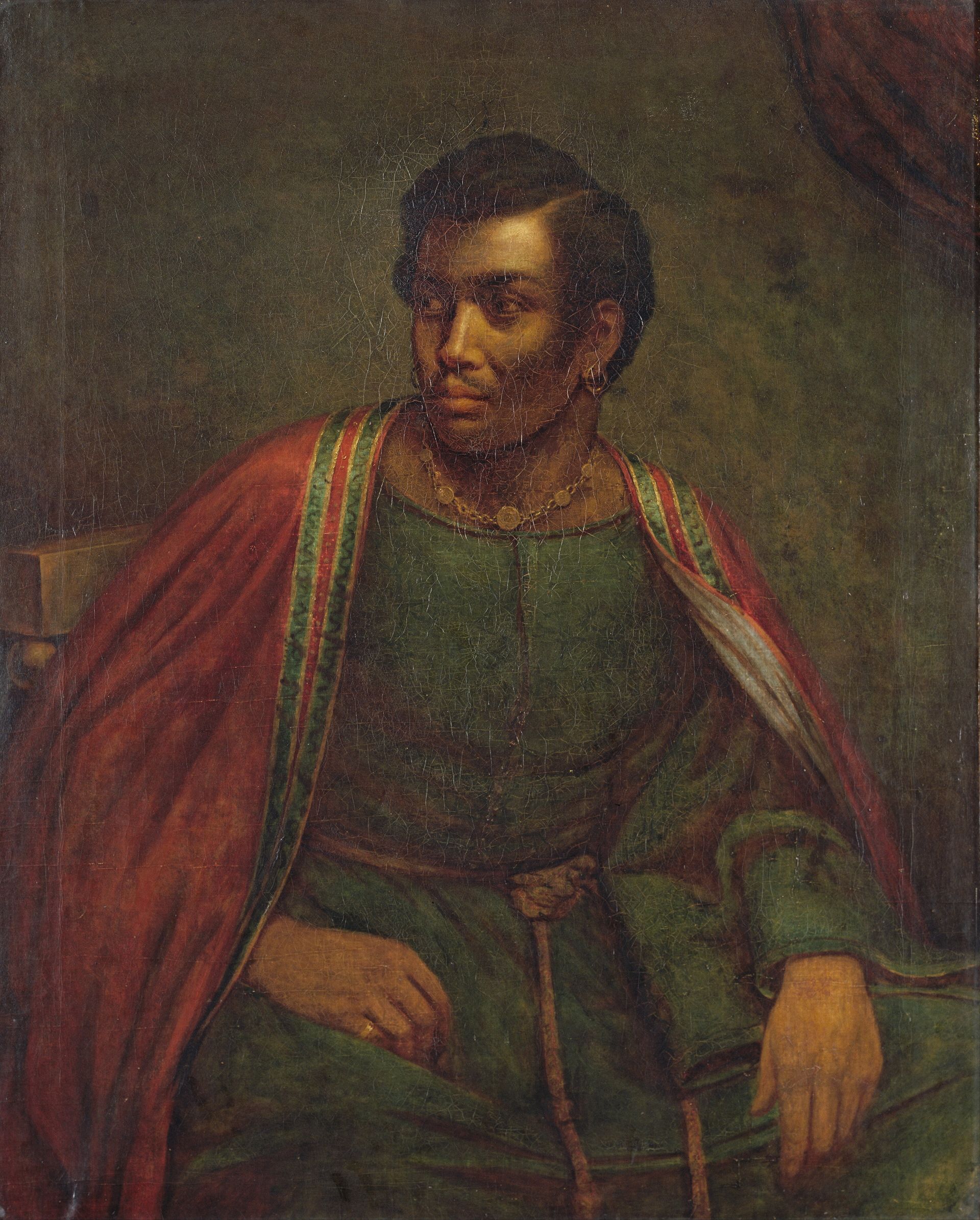
Ira Aldridge as Othello, Henry Perronet Briggs, c. 1830. Smithsonian National Portrait Gallery, NPG.72.73. Public domain reproduction via Wikimedia Commons. This is a painting, not a record of a Brighton performance.
https://commons.wikimedia.org/wiki/File:Henry_Perronet_Briggs_-_Ira_Aldridge_as_Othello_-_Google_Art_Project.jpg
Related Articles
Related Articles