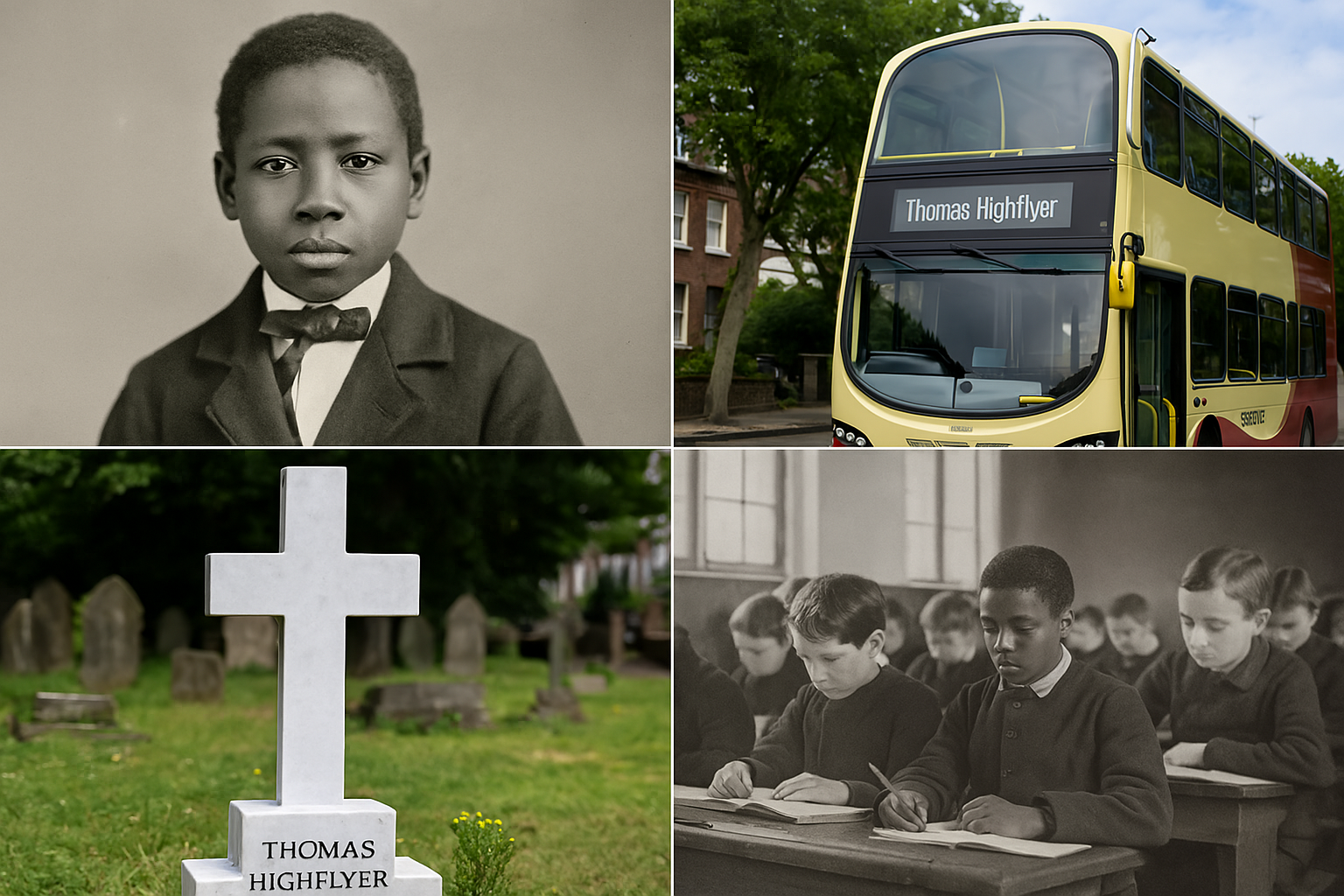
Rescued from a slave dhow by the Royal Navy in 1866, a young boy named Thomas Highflyer began a new life in Brighton, where he attended school and was embraced by a caring community. His story, though tragically short, is a powerful testament to the
era of slavery abolition and is now commemorated in Brighton through a restored grave and even a bus named in his honor.
In 1866, the Royal Navy intercepted a slave dhow off the coast of East Africa and rescued a young boy who would come to be known as Thomas Highflyer. Named after the HMS *Highflyer* that saved him, Thomas was around eight years old when he was brought to Britain, beginning a new chapter of his life far from his homeland.
After arriving in England in 1868, Thomas was placed with a caring family in Brighton. He lived with Henry and Eliza Thompson, who provided him with a loving home and the opportunity to go to school. At St. Mark’s Primary School, he learned English, made friends, and joined the local church community. In 1870, he was baptised by his own request – a moment that showed his full participation in local life.
Sadly, Thomas’s new beginning was short-lived. He fell seriously ill and died in June 1870, at about 12 years old. He was buried in Woodvale Cemetery in Brighton. His grave, which includes a cross and an inscription marking his rescue and death, was later forgotten and left neglected.
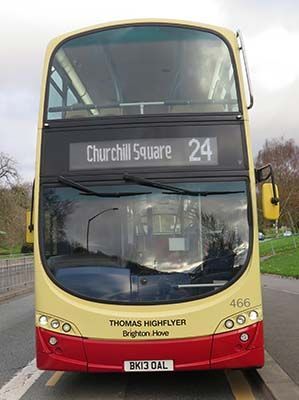
More than a century later, his story was rediscovered by local historians. In 2018, his grave was restored, and the community came together to honour him. Fittingly, a Brighton & Hove bus now bears his name, serving as a moving reminder of his life and the wider fight against slavery.
Thomas Highflyer’s story is a powerful reminder of the human cost of slavery and the compassion shown by those who cared for him. Though his life was short, his legacy endures – not just in stone or steel, but in the hearts of those who now know and remember his name.
Thomas was not the only African child whose life was altered by the long reach of the slave trade and brought, by very different routes, to Brighton. Olaudah Equiano survived enslavement as a child to become one of the most powerful voices in the abolition movement — his writing helped build the public conscience that made rescues like Thomas's possible. Sarah Forbes Bonetta was also a child taken from West Africa, who came under the protection of Queen Victoria and was married in Brighton in 1862. You can also read more about Brighton's own connections to the slave trade and its legacy.