Brighton heard his celebrated music and gave new works their first performances. The connection continued through his daughter Avril who's story is told here.
On 12 August 1908, Samuel Coleridge-Taylor conducted his music at Brighton Dome and received such an enthusiastic response that he was called back to acknowledge the audience repeatedly. Pieces from his Hiawatha cantatas were part of the programme. The composer himself, already famous for that music, was now standing before Brighton's listeners.
The concert began a particularly fruitful period in his relationship with the town. New compositions would receive their first performances here, giving Brighton a place in the making of his music as well as its reception.
Hiawatha at Brighton Dome
Coleridge-Taylor was born in London in 1875 to an English mother and a father from Sierra Leone. By the time he appeared at the Dome in 1908, his Hiawatha music had made him an internationally recognised composer. The Mixed Museum's research into the Brighton concert follows the excitement in contemporary newspapers and the response once he reached the stage.
The account describes repeated returns to acknowledge the applause. It also places the concert within Brighton's own musical life, including the municipal orchestra and local choral performers. The visiting composer depended on musicians here to bring the scores before an audience.
The Hiawatha cantatas took their story from Henry Wadsworth Longfellow's poem. Their popularity should not make us treat the poem, or the later costumed productions, as a straightforward account of Indigenous American life. They were works made and performed through particular nineteenth- and twentieth-century ideas about other cultures.
New music first heard in Brighton
The Dome's heritage history records two Coleridge-Taylor premieres at the Brighton Musical Festival: Bon-Bon Suite in 1909 and Endymion's Dream in 1910. These were occasions when local listeners encountered new work, before it had an established performance history.
Three Brighton dates
1908: Coleridge-Taylor conducts his music at the Dome. 1909: Bon-Bon Suite receives its premiere at the Brighton Musical Festival. 1910: Endymion's Dream follows at the same festival.
The festival belonged to an earlier period of Brighton's concert history. It should not be confused with today's Brighton Festival. The venue's history of the Concert Hall describes its revival in 1907 under Joseph Sainton, with Coleridge-Taylor among the composers who conducted there.
These premieres brought local listeners into a new part of Coleridge-Taylor's working life. Alongside the familiar Hiawatha music, Brighton heard compositions that he was adding to his catalogue.
Avril returns to the same stage
Samuel Coleridge-Taylor died in 1912, aged 37. His family's relationship with Brighton Dome continued through his daughter, Avril Coleridge-Taylor. In 1926 she sang Minnehaha in Hiawatha at the Dome. In 1946 she returned as a conductor, with a programme that included her own Piano Concerto in F minor.
Those appearances deserve to be read as part of Avril's own working life. They also allow us to follow the family's Brighton connection across different generations and different kinds of performance.
Our wider story of Brighton Dome and Mandela Hall follows other meetings between Black cultural history and local places. Coleridge-Taylor adds something specific to the Dome's record: the composer on the platform, familiar music heard under his direction, and two new works first performed in Brighton.
Continue reading
https://www.echoesofbrightonspast.co.uk/avril-coleridge-taylor-brighton-sussex
https://www.echoesofbrightonspast.co.uk/southern-syncopated-orchestra-brighton
Banner: Brighton Dome, Church Street, photographed by Paul Gillett, 2011. CC BY-SA 2.0. https://commons.wikimedia.org/wiki/File:Brighton_Dome_-_geograph.org.uk_-_2490412.jpg
Sources
The Mixed Museum: Samuel Coleridge-Taylor at Brighton Dome. Research by Dr Chamion Caballero; text by Dr Chamion Caballero and Laura Smith.
https://mixedmuseum.org.uk/samuel-coleridge-taylor-at-the-brighton-dome/
Brighton Dome: Heritage Stories, Entertainment.
https://brightondome.org/heritage-stories/heritage-stories-entertainment/
Brighton Dome: The History of Brighton Dome Concert Hall.
https://brightondome.org/news/the-history-of-brighton-dome-concert-hall/
The National Archives: Samuel Coleridge-Taylor portrait, 1901, COPY 1/451/268.
https://www.flickr.com/photos/nationalarchives/5901009552/
Image credit
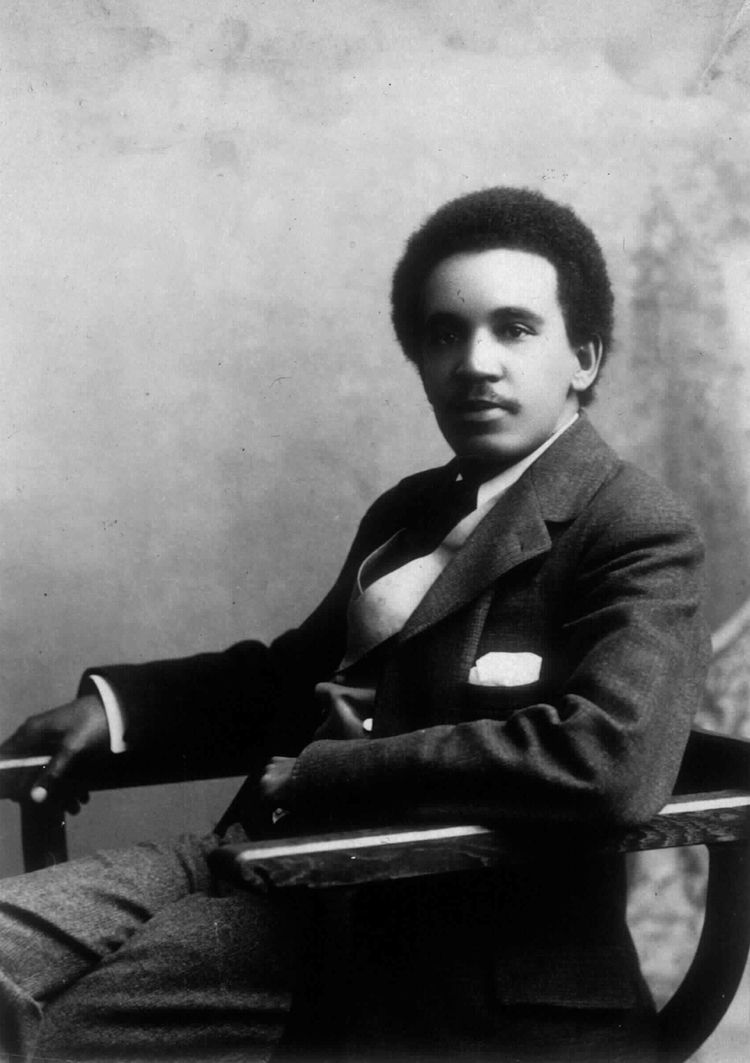
Samuel Coleridge-Taylor, 1901. Henry John Kempsell / The National Archives, COPY 1/451/268. No known copyright restrictions; Commons also marks the photograph public domain. This is not a photograph of the 1908 concert.
https://commons.wikimedia.org/wiki/File:Samuel_Coleridge-Taylor,_photographed_by_Henry_John_Kempsell_.jpg
Related Articles
Related Articles